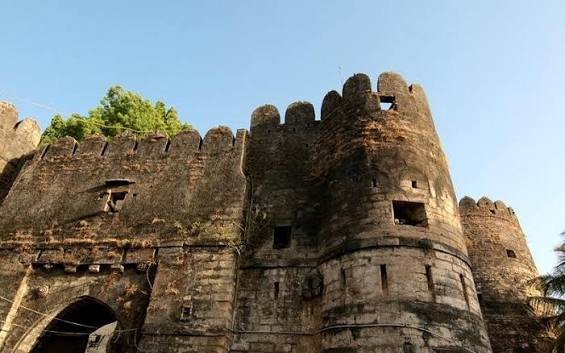
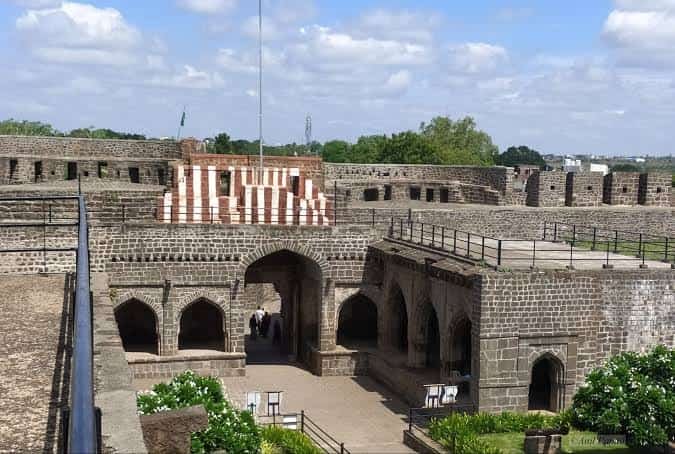
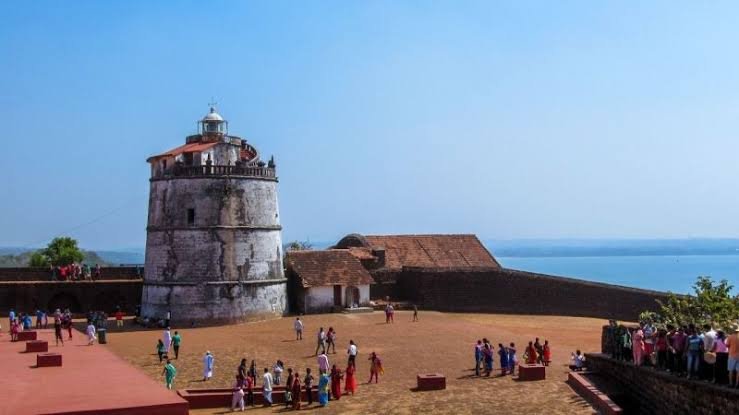
Sitabuldi Fort might be the hardest fort in this entire guide to actually get into — not because of steep climbs or long queues, but because it’s an active Indian Army base, and the general public is allowed through its gates on exactly three days of the year. Everything else about it, you’ll have to take on the strength of what’s visible from the road, or plan carefully around those three narrow windows.
| Quick Overview | Details |
| Location | Sitabuldi, central Nagpur, Maharashtra |
| Built by | British, 1817 |
| Reason | Aftermath of the Battle of Sitabuldi |
| Managed by | Indian Army (Maharashtra State Area HQ) |
| Public access days | 26 January, 1 May, 15 August |
| Timings (open days) | 8:00 AM – 4:00 PM, last entry 3:00 PM |
| Entry fee | Free |
| Terrain | Twin hills — Badi Tekri and Choti Tekri |
Built From a Battle, Not a Legacy
Unlike most forts on this list, Sitabuldi wasn’t constructed to defend an existing kingdom — it was built as a direct consequence of one falling. In 1817, during the Third Anglo-Maratha War, British forces clashed with the Bhonsle rulers of Nagpur in what became known as the Battle of Sitabuldi, fought across these very twin hills. The outcome proved decisive: British victory here effectively ended Bhonsle control over Nagpur and cemented firm colonial authority across central India.
Immediately following that battle, the British constructed the fort on the site, both to commemorate the victory and to establish a permanent, strategically elevated military presence right at the heart of the newly controlled city. Memorials and tombs honoring soldiers who died in the battle remain within the fort grounds today, a quieter, more solemn counterpart to the panoramic city views the hilltop offers.
A Fort the Army Still Guards
What makes Sitabuldi genuinely unusual is that it never transitioned into a purely historical monument the way most Indian forts eventually did. It remains an active military installation, currently maintained by the Indian Army’s Maharashtra State Area headquarters, with the 118th Infantry Battalion of the Territorial Army Grenadiers associated with the site. Spread across roughly 90 acres atop Badi Tekri and Choti Tekri — literally the “big hillock” and “small hillock” — the fort still functions as a working garrison rather than a heritage tourist attraction.
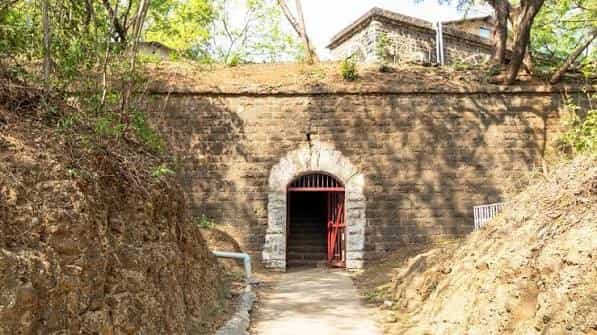
That ongoing military role explains everything else about visiting Sitabuldi. There are no regular commercial tours, no everyday ticket counter, and no casual walk-in access the way there might be at an ASI-managed monument. The fort’s bastions, ramparts, and underground chambers reflect genuine 19th-century British military engineering, adapted specifically to this elevated central Indian terrain — but experiencing any of it requires timing your visit very deliberately.
The Three Days a Year You Can Actually Get In
Public access to Sitabuldi Fort is restricted to exactly three national observance days each year: Republic Day (26 January), Maharashtra Day (1 May), and Independence Day (15 August). On these days, and only these days, the general public can walk through the heritage sections of the fort.
- Visiting hours on open days run from 8:00 AM to 4:00 PM, with last entry typically cut off at 3:00 PM.
- Entry is completely free on all three days.
- A valid photo ID is required to gain access, given the site’s status as a military area.
- Photography is generally permitted in accessible public sections, but flash photography and photographing specific military installations or personnel is strictly prohibited.
- Crowds build up significantly on these days, given how limited the access window is, so arriving early in the morning is genuinely worth prioritizing.
- Steep slopes and stairs across the hilltop terrain make the site difficult to navigate for visitors using wheelchairs or with limited mobility.
Outside of these three dates, the fort remains completely closed to the general public, functioning purely as an active garrison for the rest of the year.
Sitabuldi Fort Timings
On its three public access days, the fort operates from 8:00 AM to 4:00 PM, with last entry generally enforced at 3:00 PM to allow enough time for visitors to complete their tour before closing. On every other day of the year, there are no public visiting hours at all — the fort simply isn’t accessible.
Sitabuldi Fort Ticket Fee
There’s no entry fee whatsoever on the three days the fort opens to the public, consistent with its status as a military heritage site rather than a commercially ticketed monument. There are also no separate charges for guided tours or special access, since the fort doesn’t operate any regular commercial services — any activity beyond standard public access would require official military permission.
Best Time to Visit and Practical Tips
Given that visiting is only possible on three fixed dates, “best time to visit” here really means picking the right one of those three days based on your own schedule, since weather differs meaningfully across them. January’s Republic Day falls during Nagpur’s comfortable winter season, generally the most pleasant of the three for extended walking on the hilltop’s exposed terrain. August’s Independence Day falls during monsoon, bringing cooler temperatures but a real chance of rain, while May Day sits squarely in Nagpur’s punishing pre-monsoon heat, best approached with an early arrival and plenty of water.
Regardless of which date you choose, wear comfortable closed-toe shoes given the stone pathways and steps, carry your own water since shops are limited on-site, and expect meaningful crowds given how narrow the access window is each year.
Facts Worth Knowing
- Sitabuldi Fort was built in 1817 directly in the aftermath of the Battle of Sitabuldi, which ended Bhonsle rule over Nagpur.
- The fort remains an active Indian Army installation today, one of the few forts in India still serving a genuine, ongoing military function.
- Public access is limited to just three days each year: Republic Day, Maharashtra Day, and Independence Day.
- The fort’s twin-hill terrain, Badi Tekri and Choti Tekri, sits right in the heart of modern Nagpur, offering sweeping views over Zero Mile and the surrounding city.
FAQs About Sitabuldi Fort
Q1. Is there any way to visit Sitabuldi Fort outside the three official public access days?
Generally, no. As an active military base, regular public access simply isn’t available, and any exception would require specific official military permission, which isn’t a standard option for casual visitors.
Q2. What identification do I need to carry to enter Sitabuldi Fort on a public access day?
A valid photo ID is required, since the site remains an active military installation even on days when the public is allowed in. Carrying government-issued identification is essential.
Q3. Is Sitabuldi Fort accessible for visitors with mobility challenges?
Not easily. The hilltop terrain involves steep slopes and stairs, making it genuinely difficult for wheelchair users or anyone with significant mobility limitations to navigate comfortably.
Q4. Which of the three open days offers the best visiting experience?
Republic Day in January generally offers the most comfortable weather given Nagpur’s cooler winter conditions, though all three days draw significant crowds given how limited the annual access window is.