Chapora Fort probably has more Instagram posts dedicated to it than actual historical write-ups, and there’s a reason for that — three friends once sat on these very walls in a film that changed how a generation of Indians thought about friendship and travel. But strip away the movie references, and what’s left is a genuinely interesting slice of Goa’s Portuguese-Maratha history, sitting quietly above one of the state’s best sunset views.
| Quick Overview | Details |
| Location | Near Vagator, North Goa |
| Built by | Adil Shah of Bijapur |
| Year built | Around 1612–1617 |
| Also known as | Shahpura, “Dil Chahta Hai Fort” |
| Timings | No fixed hours; unlit after dark, treat sunset as closing |
| Entry fee | Free |
| Distance from Mapusa | Approx. 10 km |
| Climb time | 12–15 minutes from base |
From Shahpura to Chapora Fort
Long before Bollywood found it, this laterite-stone structure was known as Shahpura, meaning “town of Shah,” built under Adil Shah of Bijapur somewhere around the early 1600s to keep watch over the surrounding coast and river routes. Its position, high on a headland overlooking the Chapora River meeting the Arabian Sea, made it a natural checkpoint for controlling movement along the water.
The fort didn’t stay in one set of hands for long, though. Sambhaji, Shivaji’s son, laid siege to it in 1683, and decades later it changed hands again under regional Maratha forces. Eventually, the Portuguese took control and rebuilt sections of the structure, giving it the layered, mixed architectural character it carries today — Bijapuri foundations wrapped in Portuguese-era reconstruction. There’s also a curious historical footnote tied to the fort: Prince Akbar, son of Mughal emperor Aurangzeb, reportedly sought refuge with Maratha forces near here after rebelling against his own father, using the area as something of a base camp during that turbulent period.
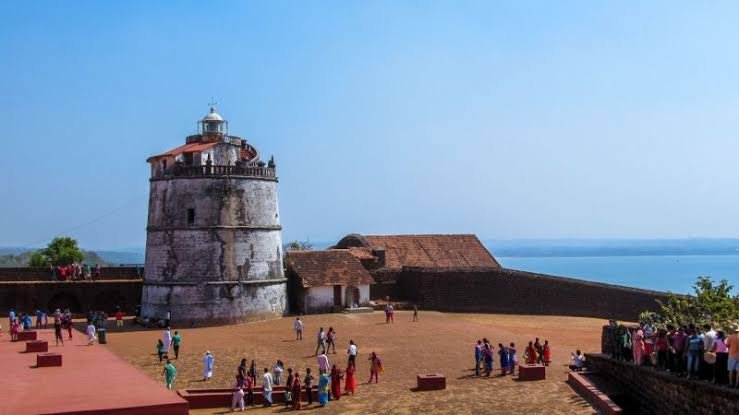
By the time Goa gained independence, the fort had already fallen into disuse, and today what remains are ruins — crumbling bastions, faint outlines of old barracks, and walls worn smooth by centuries of monsoon rain.
The Dil Chahta Hai Connection
Ask most young Indian travellers why Chapora Fort is on their Goa itinerary, and the answer usually has nothing to do with Adil Shah or Sambhaji. It’s the 2001 film Dil Chahta Hai, where the fort became the backdrop for one of Hindi cinema’s most quoted friendship scenes. That single film sequence turned a fairly obscure ruin into a pilgrimage site for fans, and locals still refer to it informally as the “Dil Chahta Hai Fort” as a result.
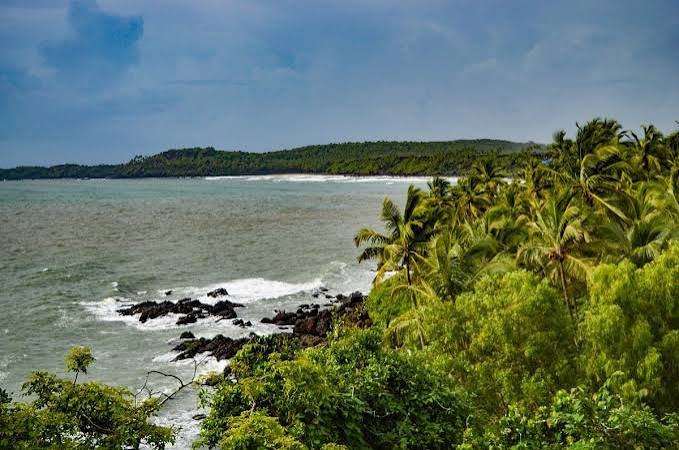
Whatever brought you here, the reason people keep returning is the same: the view from the top genuinely earns its reputation. Vagator Beach unfolds on one side, the Chapora River meets the open sea on the other, and at sunset, the entire headland turns a shade of orange that photographers specifically plan their Goa trips around.
Getting to the Top
The climb itself is short but not effortless, especially in Goa’s humidity.
- Park near Chapora village at the base and follow the red-mud path upward.
- The walk takes roughly 12 to 15 minutes at a relaxed pace.
- The trail gets noticeably slippery during monsoon, so proper footwear matters more here than the short distance suggests.
- There’s no shade along most of the path, so early morning or late afternoon visits are far more comfortable than a midday climb.
- A couple of small juice stalls operate near the base, but there’s nothing at the top itself, so carrying water is essential.
Chapora Fort Timings
There’s no official gate, no ticket counter, and technically no fixed closing time on paper. That said, the site has no lighting after dark, and the climb down becomes genuinely risky once the sun sets, so most visitors treat sunset as the practical closing hour. Arriving by around 5:15 PM during peak season gives you enough time to find a spot along the walls before the crowd thickens for golden hour.
Chapora Fort Ticket Fee
There’s no entry fee at all, which puts it in the same free-access category as most of Goa’s laterite forts along the Mandovi and Chapora rivers. Unlike some of the state’s better-preserved forts, there’s no museum section or ticketed area within the ruins — you’re free to walk the walls and bastions at your own pace without any counter to stop at.
Best Time to Visit
The dry months from November through February bring the most comfortable climbing conditions, with clear skies that make both the sunset and the surrounding coastal views worth the short trek. Monsoon season turns the hills a vivid green and dramatically reduces crowds, but the slippery red-mud trail becomes a real consideration, particularly for anyone visiting in flip-flops expecting a casual stroll.
Facts Worth Knowing
- The fort’s structure blends Bijapuri Islamic architecture with later Portuguese rebuilding, a mix visible in its surviving wall sections.
- It was besieged multiple times, including once by Sambhaji, Shivaji’s own son, in 1683.
- The site has no official entry gate or closing time, unlike most ticketed monuments in India.
- Some sections of the ruins are believed to have included escape tunnels, though little physical evidence survives to confirm their exact layout today.
FAQs About Chapora Fort
Q1. Is Chapora Fort safe to visit alone, especially for solo female travellers?
Generally yes during daylight hours, given how frequently visited the site is. Since there’s no lighting after dark, though, it’s best avoided alone once the sun goes down, particularly on the unlit descent path.
Q2. Can I combine a Chapora Fort visit with Vagator or Anjuna beach in the same trip?
Absolutely, and most visitors do exactly that. The fort sits close enough to both beaches that a half-day covering all three locations is a common and comfortable itinerary.
Q3. Is there anything to actually see inside the fort, or is it just ruined walls?
It’s largely ruins at this point — crumbling bastions and wall outlines rather than intact rooms or structures. The real draw is the view and the walk itself, not detailed interior architecture.
Q4. What should I carry for the climb, given there are no shops at the top?
Water is essential since there’s nothing available once you’re up there. Sturdy footwear also matters, especially outside the dry winter months when the trail gets slippery.