St. Angelo Fort witnessed one of Portuguese colonial history’s more revealing episodes of raw political ambition — a sitting Viceroy who simply refused to hand over power, arresting his own successor and imprisoning him within these very walls for six months. That single act of stubbornness ended up costing Portugal its hold over the fort entirely, a genuinely fitting irony for a stronghold built to project imperial authority.
| Quick Overview | Details |
| Location | Kannur, Kerala (overlooking Mappila Bay) |
| Also known as | Kannur Fort, Kannur Kotta |
| Built by | Dom Francisco de Almeida, first Portuguese Viceroy of India |
| Year built | 1505 CE |
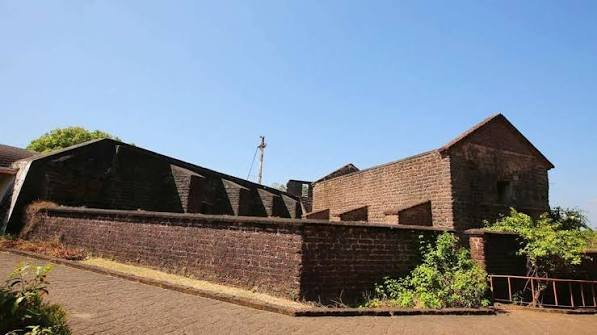
| Material | Laterite, triangular structure |
| Timings | Standard daylight hours (verify locally) |
| Entry fee | Nominal ASI-managed fee |
| Bastions | Hollandia, Zeelandia, Frieslandia (added by Dutch) |
Built With the Local King’s Permission
St. Angelo Fort was commissioned in 1505 by Dom Francisco de Almeida, the very first Portuguese Viceroy of India, following careful negotiations with the local Kolathiri Raja for permission to build on this strategically valuable site overlooking Mappila Bay, a natural harbor along Kerala’s spice-rich coastline. That diplomatic arrangement between European colonizers and an indigenous ruler reflects just how central Kannur’s position was to controlling the broader Malabar spice trade at the time.
The fort’s earliest form was actually built from wood rather than stone, and it was Almeida’s eventual successor, Afonso de Albuquerque, who oversaw its reconstruction in solid laterite — a fact that makes what happened between these two men shortly afterward all the more striking.
The Viceroy Who Wouldn’t Let Go of Power
In one of the more dramatic episodes connected to any Portuguese fort in India, Almeida had Albuquerque arrested following the Battle of Diu, refusing to step aside as Viceroy despite Albuquerque having already been named his official successor. Almeida imprisoned Albuquerque within St. Angelo Fort itself for roughly six months, a genuine power struggle playing out at the highest level of Portuguese colonial administration.
Back in Portugal, senior officials firmly backed Albuquerque’s claim to the position, but by the time political pressure finally forced the matter, considerable damage had already been done — both diplomatically and, quite literally, to the fort itself, which suffered serious harm during the resulting conflict. That internal Portuguese crisis ultimately contributed to Portugal’s eventual loss of the fort altogether, a rare case of a colonial power’s own internal politics undermining its hold on a strategic possession more than any external siege managed to.
Indigenous Resistance and a Muslim Royal Family
St. Angelo Fort’s subsequent history reflects the genuinely contested nature of Malabar’s spice-trade coastline. In 1564, local forces under the leadership of Kunjali Marakkar, a celebrated naval commander associated with resistance against Portuguese dominance, seized the fort — a demonstration of indigenous pushback against European colonial control that stands out among the fort’s many changes of hand.
The fort survived a significant siege in 1507, when the Zamorin of Calicut and the Kolathiri king mounted a joint attack, though the Portuguese successfully defended their position, underscoring just how strategically valuable the site was considered. After more than a century of Portuguese presence, the Dutch East India Company captured St. Angelo Fort in 1663, undertaking significant renovations that added the three bastions still recognizable today — Hollandia, Zeelandia, and Frieslandia — along with a defensive moat and sea wall.
In 1772, the Dutch sold the fort to Ali Raja of Arakkal, ruler of the Arakkal royal family — notably the only Muslim royal dynasty in Kerala’s history. The Arakkal palace still stands directly beside the fort today, now converted into a museum. Finally, the British seized control in 1790, using St. Angelo Fort as their primary military station along the Malabar Coast right up until India’s independence in 1947.
What Survives Today
Despite centuries of battles, sieges, and changing colonial ownership, St. Angelo Fort retains a genuinely rich collection of surviving structures.
- Massive laterite ramparts and bastions — including the Dutch-era Hollandia, Zeelandia, and Frieslandia sections.
- An old chapel and stables — reflecting the fort’s religious and practical infrastructure across its various occupying powers.
- A long prison cell — a somber reminder of the fort’s punitive history, including its role in the Almeida-Albuquerque episode.
- Soldiers’ tombstones — marking the graves of those who died defending the fort across its long, contested history.
- Cannons still facing the sea — positioned along the ramparts, a striking visual reminder of the fort’s maritime defensive purpose.
- Kannur’s first lighthouse — standing adjacent to the fort, adding a further layer of maritime history to the site.
St. Angelo Fort Timings
The fort generally operates during standard daylight hours, and given its status as an ASI-protected monument, confirming current opening and closing times locally before your visit is a sensible precaution.
St. Angelo Fort Ticket Fee
A nominal entry fee applies, consistent with ASI-managed heritage sites elsewhere in Kerala. Confirming the exact current rate at the entrance is worth doing given periodic revisions.
Best Time to Visit and Getting There
October through March brings Kerala’s most comfortable weather for exploring the fort’s exposed sea-facing ramparts and grounds. Sunset visits are particularly popular, given the fort’s cliffside position overlooking the Arabian Sea and Mappila Bay, offering genuinely striking views as the light fades. Combining a visit with the neighboring Arakkal Museum, housed in the former royal palace, adds meaningful historical depth to the trip.
Facts Worth Knowing
- Portuguese Viceroy Dom Francisco de Almeida imprisoned his own successor, Afonso de Albuquerque, within St. Angelo Fort for roughly six months rather than relinquish power.
- Local naval commander Kunjali Marakkar seized the fort from Portuguese control in 1564, a notable act of indigenous resistance.
- The fort was eventually sold to the Arakkal royal family in 1772, the only Muslim royal dynasty in Kerala’s history, whose palace now stands beside the fort as a museum.
- The British used St. Angelo Fort as their primary Malabar Coast military station from 1790 until India’s independence in 1947.
FAQs About St. Angelo Fort
Q1. Is St. Angelo Fort worth visiting alongside the neighboring Arakkal Museum?
Yes, genuinely so, given their close proximity and shared history — the Arakkal royal family once owned the fort itself, and their former palace, now a museum, offers meaningful additional context to a fort visit.
Q2. What is the best time of day to visit St. Angelo Fort for photography?
Late afternoon into sunset is widely recommended, since the fort’s cliffside position over the Arabian Sea and Mappila Bay offers particularly striking light and views during this window.
Q3. Can visitors see the actual prison cell connected to the Almeida-Albuquerque imprisonment story?
The fort does preserve a long-drawn-out prison cell among its surviving structures, though confirming specific historical attribution to that particular episode is best done through an on-site guide or the fort’s own signage.
Q4. Is St. Angelo Fort suitable for a family visit with children?
Yes, generally, given its relatively open, walkable grounds and the genuinely engaging historical stories connected to the site, though supervision near the sea-facing ramparts and uneven sections is advisable.