Raghupur Fort sits higher than almost any other fort you’ll find in India — roughly 3,600 metres above sea level, on a windswept alpine meadow where horses graze quietly among crumbling stone walls and nobody is entirely certain who built it or exactly when.
| Quick Overview | Details |
| Location | Near Jalori Pass, Tirthan Valley, Kullu district |
| Also called | Raghupur Garh |
| Elevation | 3,540–3,640 metres (11,800–11,940 feet) |
| Believed builders | Rulers of Mandi or Kullu (exact records lost) |
| Century | Possibly 17th–18th century |
| Trek distance | 3–5 km from Jalori Pass |
| Timings | Daylight hours; avoid winter (heavy snow) |
| Entry fee | Free (a nominal ₹30 area/parking fee may apply at Jalori Pass) |
A Fort Whose Builders History Forgot
Unlike most forts on this list, Raghupur genuinely resists precise dating. Historical accounts generally attribute its construction to the rulers of either Mandi or Kullu, most likely sometime during the 17th or 18th century, though exact records simply haven’t survived to confirm who commissioned it or precisely when. What is generally agreed upon is its purpose: the fort once guarded the old trade route connecting the Kullu and Shimla valleys, a strategically valuable Himalayan corridor that made a defensive outpost at this altitude genuinely worthwhile despite the extreme conditions.
That genuine historical uncertainty — a rarity in a country where most forts come with reasonably documented founding stories — is part of what makes Raghupur feel so different from the ticketed, well-researched monuments elsewhere in this series. It’s a fort history has mostly let slip away, leaving only the physical remains to speak for themselves.
The Highest Fort You’ll Likely Ever Trek To
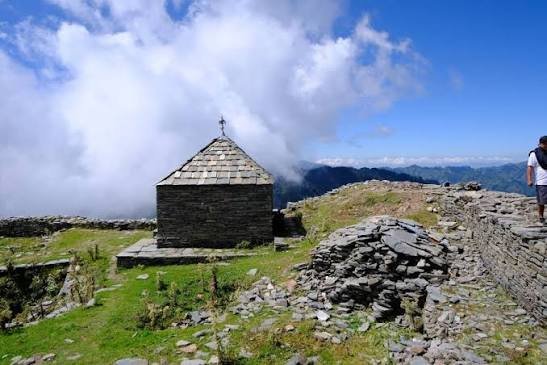
Perched at 3,600 to 3,640 metres, Raghupur Fort ranks among the highest-altitude forts anywhere in India, and its current state reflects centuries of exposure to genuinely brutal Himalayan weather. What remains today are the crumbling stone walls of the original structure, a small temple, and vast open grasslands where horses now graze freely beneath the shadow of the Great Himalayan range.
The setting itself has become the fort’s real draw. Surrounded by 360-degree views of snow-clad peaks, the alpine meadow offers one of the more accessible high-altitude trekking experiences in the region, and its remote, largely undeveloped character has made it a genuine favorite for sunrise and sunset photography, quiet camping, and simply lying back to watch the Milky Way stretch across a genuinely dark, unpolluted sky.
The Trek From Jalori Pass
Reaching Raghupur Fort begins at Jalori Pass, itself sitting at an elevation of roughly 10,800 feet and reachable by road from the village of Jibhi, about 15 km and 45 to 60 minutes away by car or taxi.
- The trek covers 3 to 5 km one way, generally taking 2 to 3 hours depending on pace and fitness.
- The route winds through dense oak and rhododendron forest before opening onto the high alpine meadow where the fort ruins sit.
- Near Jalori Pass, the Kali Mata (or Jalori Mata) temple offers a natural starting point and a spot for a brief stop before beginning the ascent.
- A small snacks corner along the trail offers basic refreshments including parathas, Maggi noodles, chai, and eggs, useful given the limited facilities elsewhere along the route.
- Camping is genuinely popular at the meadow, with tents available for rent around ₹1,000 per person, allowing for stargazing after dark — though carrying essentials like headlamps, thermal layers, and a power bank is strongly advisable given how cold nights get regardless of season.
- A less-traveled path roughly 1 km beyond the fort leads to a small, serene lake worth the detour for those with time and energy remaining.
Many visitors combine the Raghupur trek with a stop at nearby Serolsar Lake, a scenic spot surrounded by hills and tall pines, home to a temple dedicated to Budhi Nagin, mother of the 60 Nag Devatas revered across Himachal Pradesh.
Raghupur Fort Timings
There’s no formal opening or closing schedule, given the fort’s remote, unticketed nature. Visitors should plan to start the trek early in the morning from Jalori Pass to allow ample daylight for both the ascent and a safe return, since the trail and surrounding terrain become considerably more hazardous after dark, particularly at this altitude.
Raghupur Fort Ticket Fee
There’s no entry fee to visit Raghupur Fort itself, though a nominal fee of around ₹30 per person applies at Jalori Pass, likely covering general area access or parking rather than the fort specifically.
Best Time to Visit
March through June and September through November offer the most favorable trekking conditions, avoiding both the harshest winter snow and the peak monsoon rains. Winter months should generally be avoided altogether, since heavy snowfall at Jalori Pass makes the trek to the fort genuinely difficult and, in poor conditions, unsafe. Regardless of season, temperatures can drop below freezing at night given the altitude, so warm layers are essential on any visit, day trip or overnight camp alike.
Facts Worth Knowing
- Raghupur Fort sits at roughly 3,600 metres, making it one of the highest-altitude forts in India.
- The fort’s exact builders and construction date remain historically uncertain, generally attributed to the rulers of Mandi or Kullu sometime in the 17th or 18th century.
- The site once guarded a strategic trade route connecting the Kullu and Shimla valleys through the high Himalayas.
- The alpine meadow surrounding the ruins has become a genuine favorite for stargazing and Milky Way photography, given its remote, low-light-pollution setting.
FAQs About Raghupur Fort
Q1. Is the Raghupur Fort trek suitable for beginners?
It’s rated moderate to challenging, given the altitude and steep sections along the route, so reasonable fitness and prior trekking experience are genuinely helpful, though the trail remains manageable for most reasonably fit hikers.
Q2. Can I camp overnight at Raghupur Fort, and what should I bring?
Yes, camping is popular at the meadow, with tents available for rent around ₹1,000 per person. Carrying headlamps, thermal layers, and a power bank is strongly advisable given how cold nights get at this altitude regardless of season.
Q3. Is Raghupur Fort accessible during winter months?
Generally not recommended, since heavy snowfall at Jalori Pass makes the trek genuinely difficult and potentially unsafe during this period; March through June and September through November offer far better conditions.
Q4. Are food and water available along the Raghupur Fort trek route?
A small snacks corner near the meadow offers basic items like parathas, Maggi, and chai, but facilities are otherwise limited, so carrying your own water and any specific supplies you need is genuinely advisable.