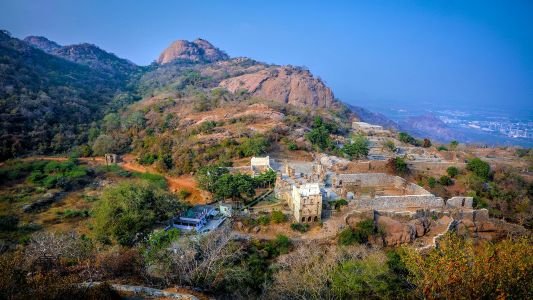
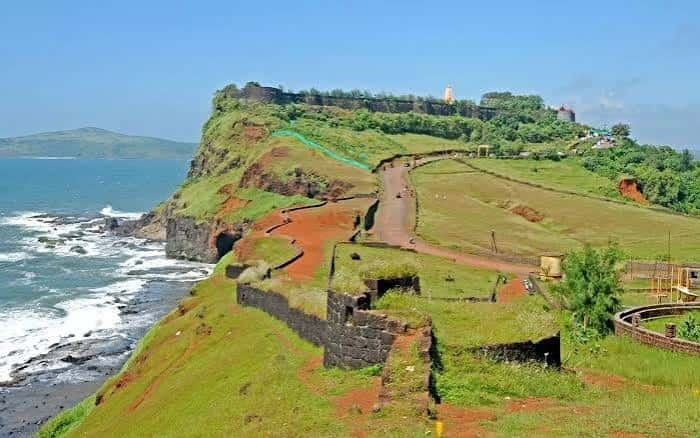
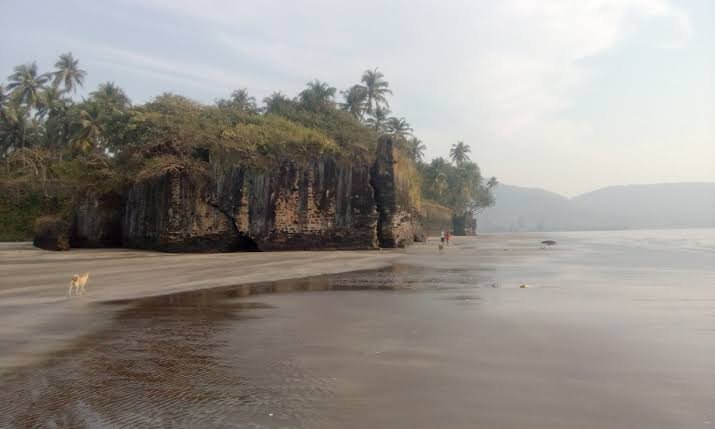
Srirangapatna Fort is where Tipu Sultan, the “Tiger of Mysore,” made his last stand and died defending the capital he had spent his entire reign fortifying. Surrounded on three sides by the Kaveri River and reinforced with the help of French military engineers, this island-like stronghold was designed to be unconquerable — and for the better part of two decades, against repeated British assault, it very nearly was.
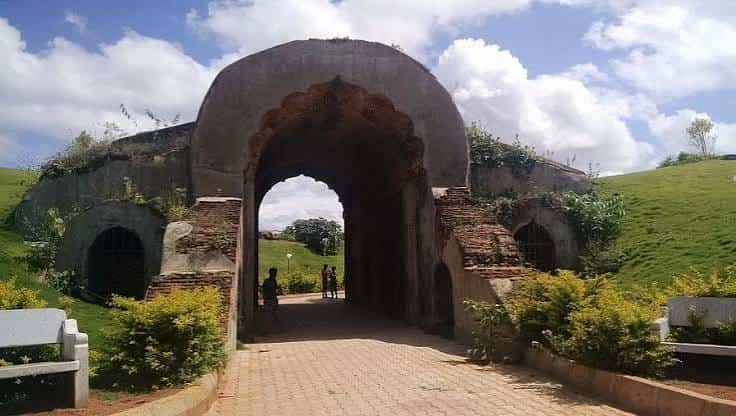
| Quick Overview | Details |
| Location | Srirangapatna, Mandya district, Karnataka |
| Original construction | 1454 CE, under Timmanna Nayaka (Vijayanagara era) |
| Major fortification | Hyder Ali and Tipu Sultan, from 1782 |
| Area | Approx. 240 acres |
| Timings | 9:00 AM – 6:00 PM, daily |
| Entry fee | Nominal, primarily online payment |
| Historical significance | Site of Tipu Sultan’s death, May 1799 |
| Light and sound show | Daily, 7:20 PM, ₹50, 40 minutes (Kannada) |
From Vijayanagara Outpost to Tipu’s Capital
Srirangapatna Fort’s origins trace back to 1454, when Timmanna Nayaka constructed the original fortification during the Vijayanagara Empire’s rule, some accounts also crediting later reinforcement to Kempe Gowda in 1537. The fort remained under Vijayanagara authority until 1495, when the Wodeyars of Mysore took control, holding the site for centuries before its most consequential transformation began.
In 1782, Hyder Ali’s son Tipu Sultan took command of the fort and undertook extensive modifications, shifting the seat of the Mysore kingdom’s power from Mysore city itself to Srirangapatna. Recognizing the strategic value of the site’s natural river defenses, Tipu Sultan enlisted the help of French architects and engineers to further strengthen the fortifications during the late 18th century, reflecting his well-documented alliance with France against the encroaching British East India Company. Protected by the Kaveri River on its western and northern sides, the fort at its peak housed roughly 1,500 dwellings and around 6,000 people within its walls.
Where Tipu Sultan Died Defending His Capital
Srirangapatna Fort’s most historically significant moment came in May 1799, during the Fourth Anglo-Mysore War. British forces launched a decisive assault on the fort, and in the fighting that followed, Tipu Sultan himself was killed defending his capital — a death that effectively ended Mysorean resistance to British expansion in South India and marked one of the pivotal turning points in the broader story of British colonial consolidation on the subcontinent.
That final battle also brought an end to the fort’s role as a functioning royal capital. In the aftermath of Tipu’s death, the British largely destroyed Lal Mahal, his personal residence within the fort, leaving behind only a marked mound with an information board where the palace once stood.
The Rocket Court and Other Structures
Beyond its dramatic final battle, Srirangapatna Fort holds several structures reflecting both its military and religious significance.
- The rocket court — a simple structure with roughly 40-foot-high walls on three sides, believed to have served as the launch pad from which Tipu Sultan’s forces deployed their famous Mysorean rockets, an early rocket artillery technology that would later influence British Congreve rocket development.
- Dungeons — two lower chambers where captured British soldiers were reportedly held, including the well-known Captain Bailey’s Dungeon.
- Sri Ranganathaswamy Temple — dedicated to Lord Vishnu as Ranganatha, believed to have been established by the revered Vaishnava saint Ramanuja, predating the fort itself by centuries and still standing as an active place of worship within the walls.
- Narasimha Swamy Temple — an additional Hindu shrine within the fort complex.
- Masjid-e-Ala (Jama Masjid) — known for its towering minarets, reflecting the fort’s Islamic-era religious architecture.
- Wall paintings — depicting Tipu Sultan’s military victories over the British, offering a visual record of the fort’s turbulent final decades.
Srirangapatna Fort Timings
The fort is open daily from 9:00 AM to 6:00 PM, giving visitors a comfortable window to explore its considerable 240-acre grounds, including the temples, dungeons, and rocket court.
Srirangapatna Fort Ticket Fee
Entry pricing is generally modest, with online payment serving as the primary booking method. Given some variation and limited on-site information at the fort itself, hiring a local guide is genuinely recommended, since clear signage and historical context within the grounds can be inconsistent.
The Evening Light and Sound Show
Every evening at 7:20 PM, the fort hosts a 40-minute light and sound show, priced at ₹50 per person with free entry for children under 12. Narrated in Kannada only, the show traces the shift of Mysore’s capital to Srirangapatna, the reigns of Hyder Ali and Tipu Sultan, key military conquests, and glimpses of the region’s Dasara festival traditions — a genuinely engaging way to absorb the fort’s dense history after a daytime visit.
Best Time to Visit and Getting There
October through February brings the most comfortable weather for exploring the fort’s extensive grounds on foot. Srirangapatna sits conveniently close to Mysore, easily reached by taxi, KSTDC bus, or local transport, and its central location makes it simple to combine with nearby attractions including the Gumbaz (Tipu and Hyder Ali’s tombs), Tipu Sultan’s Summer Palace, and the Ranganathittu Bird Sanctuary for a fuller day of regional sightseeing.
Facts Worth Knowing
- Tipu Sultan was killed defending Srirangapatna Fort during the decisive British assault in May 1799, ending Mysorean resistance in the Fourth Anglo-Mysore War.
- French architects assisted in strengthening the fort’s fortifications during Tipu Sultan’s rule, reflecting his strategic alliance with France against the British.
- The fort’s rocket court is believed to have served as the launch site for Tipu Sultan’s Mysorean rockets, an early artillery technology that influenced later European rocket development.
- The Ranganathaswamy Temple within the fort predates the fortification itself, believed to have been established by the saint Ramanuja centuries earlier.
FAQs About Srirangapatna Fort
Q1. Is hiring a guide genuinely necessary to understand Srirangapatna Fort’s history?
Many visitors find it worthwhile, since the fort’s signage and historical markers can be inconsistent, and a knowledgeable guide can meaningfully deepen understanding of sites like the rocket court and dungeons that otherwise carry limited on-site explanation.
Q2. Can I visit Srirangapatna Fort and attend the evening light and sound show on the same day?
Yes, and this is a popular combination — exploring the fort’s ruins during the day and returning for the 7:20 PM show offers a fuller, more narrative-driven understanding of the site’s history.
Q3. Is Srirangapatna Fort worth visiting alongside Tipu Sultan’s Summer Palace and the Gumbaz?
Yes, absolutely. All three sit within close proximity in Srirangapatna, making it easy to combine the fort with the Summer Palace’s museum and the ornate tombs at Gumbaz for a comprehensive day covering Tipu Sultan’s life, reign, and legacy.
Q4. Is the rocket court structure clearly marked for visitors to identify?
Given some reported inconsistency in on-site signage across the fort, locating and understanding the significance of the rocket court is easier with a guide or prior research, so it’s worth confirming its location before your visit if this is a specific interest.