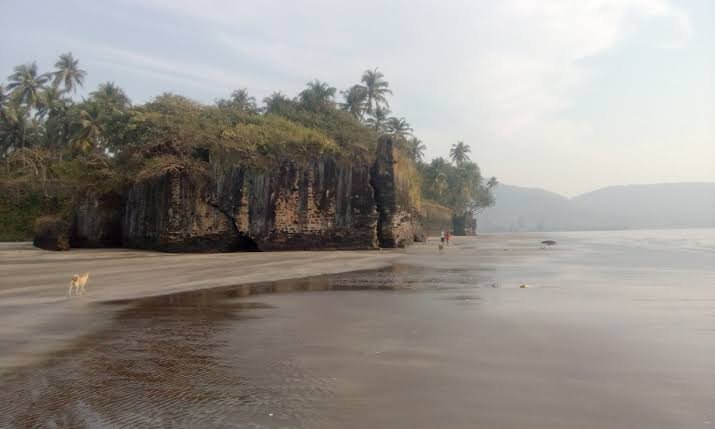
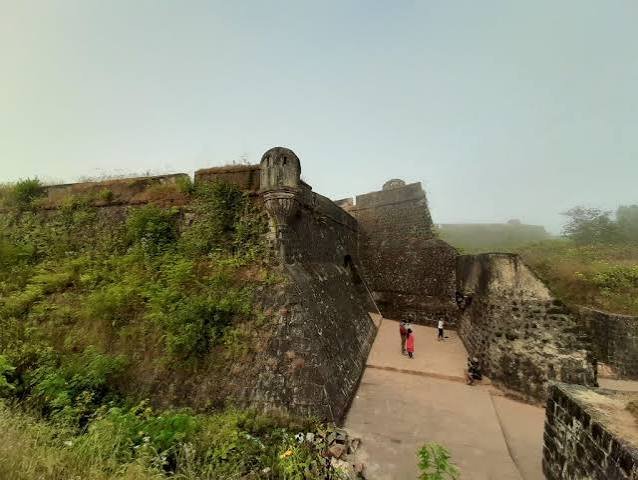
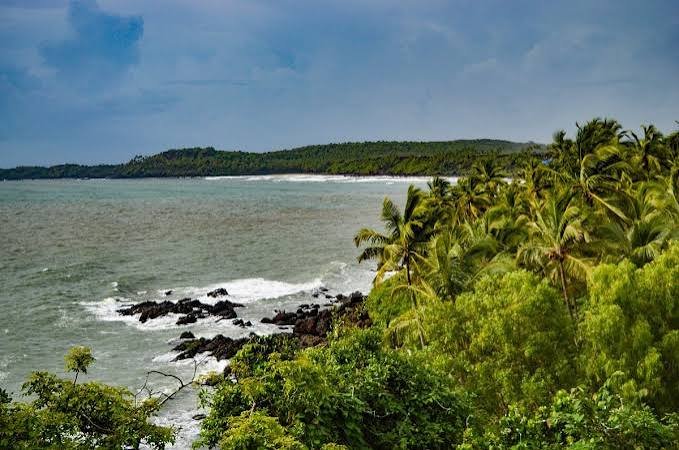
Sinquerim Fort doesn’t get its own name recognition the way its more famous neighbor does — most visitors know it simply as the “Lower Aguada Fort,” a smaller extension sitting right at sea level below the much taller fortress up on the hill. But this modest bastion played its own distinct role in Goa’s colonial defense system, serving as the actual working dock where Portuguese ships anchored, rather than just a lookout point.
| Quick Overview | Details |
| Location | Sinquerim Beach, Candolim, North Goa |
| Also known as | Lower Aguada Fort |
| Built by | Portuguese |
| Year built | 1612 |
| Timings | Open-air site, accessible during daylight hours |
| Entry fee | Free |
| Wall height | Approx. 5 metres |
| Best time to visit | November to February |
The Lower Half of Aguada’s Defense System
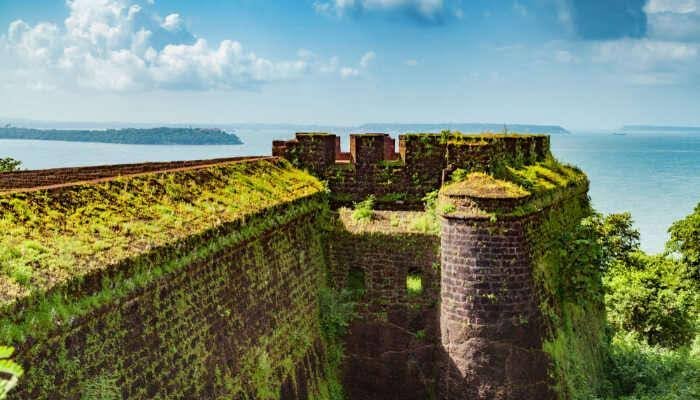
Sinquerim Fort was built in 1612, the same year as its larger, better-known upper counterpart, Fort Aguada, and it functioned as a genuine extension of that same defensive complex rather than a separate, independently commissioned structure. Together, the two forts were built with a shared purpose: guarding Goa’s coastline against Dutch naval ambitions and the growing power of Maratha forces along the western coast.
What set Sinquerim apart from the fortress above it was its practical function. Rather than simply serving as an elevated lookout, the lower fort provided a genuine anchorage point where Portuguese ships could dock safely, sheltered by the fort’s walls and bastion. During the 16th and 17th centuries, vessels arriving from Europe used Sinquerim as a reference point along the coast, making it as much a piece of maritime infrastructure as a military installation.
A Fort That Splits a Beach in Two
Sinquerim Fort’s layout consists of two main sections: a fortified bastion and a stretch of connecting wall running along both sides. Structurally modest compared to the towering ramparts of Aguada above, the lower fort’s walls stand at roughly 5 metres, a scale suited to its role protecting the immediate shoreline and dock area rather than commanding the wider coastal approach the way the upper fortress did.
Physically, the fort occupies a distinctive position along the coastline — sitting between and effectively dividing what are now known as Sinquerim Beach and Candolim Beach into two separate stretches. Walking the beach trail here means passing directly alongside the fort’s walls, with the Arabian Sea running close beside the path the entire way, making the site as much a scenic coastal walk as a historical stop.
Given its close connection to Aguada, most visitors treat the two forts as a single combined excursion rather than separate destinations, walking the connecting trail between them in around an hour to ninety minutes at a relaxed pace.
Sinquerim Fort Timings
As an open-air historical site without gates, ticket counters, or formal management infrastructure, Sinquerim Fort has no fixed opening or closing hours in the strict sense. It’s generally accessible throughout daylight hours, and given the uneven terrain along parts of the site, visiting well before sunset is advisable for anyone unfamiliar with the walking path.
Sinquerim Fort Ticket Fee
There’s no entry fee at all — Sinquerim Fort is a public, open-air area with no admission charge, consistent with its status as an extension of the broader Aguada complex rather than a separately ticketed monument.
Best Time to Visit and Getting There
November through February brings Goa’s most comfortable weather, ideal for the walking involved in exploring both the lower fort and the connecting beach trail up toward Aguada. Sunrise and sunset are particularly recommended times to visit, both for the quality of light over the Arabian Sea and for noticeably thinner crowds compared to midday visits. The fort sits roughly 15 to 18 km from Panaji, easily reached by taxi, auto-rickshaw, or rented scooter, and is walkable from both Candolim and Sinquerim beaches for visitors already staying in the area. Given how closely connected the site is to Fort Aguada and the Taj Fort Aguada Resort nearby, most itineraries naturally combine all three in a single outing.
Facts Worth Knowing
- Sinquerim Fort is commonly referred to as the Lower Aguada Fort, built as a functional extension of the larger fortress on the hill above it.
- Unlike Aguada’s primarily defensive lookout role, Sinquerim served as an actual anchorage point where Portuguese ships docked safely.
- The fort’s position physically divides the coastline into Sinquerim Beach and Candolim Beach, making it a natural landmark along the shore.
- As a public, unticketed open-air site, Sinquerim Fort has no formal management infrastructure, phone number, or official visiting hours.
FAQs About Sinquerim Fort
Q1. Should I visit Sinquerim Fort and Fort Aguada together, or are they separate trips?
Most visitors combine both in a single outing, since they’re connected by a walkable beach trail taking roughly an hour to ninety minutes, and Sinquerim’s modest scale makes it a natural quick stop alongside the larger, more elaborate Aguada Fort above.
Q2. Is the walking path between Sinquerim and Aguada Fort suitable for children or elderly visitors?
The terrain is generally manageable but uneven in sections, so supervision is advisable for children, and visitors with mobility concerns should proceed cautiously, particularly near the fort’s walls and rockier stretches close to the water.
Q3. Is there anywhere to eat or find shade near Sinquerim Fort?
Facilities directly at the fort are limited, though Sinquerim and Candolim beaches nearby offer plenty of beach shacks and restaurants, making it easy to combine the visit with a meal or drink close by.
Q4. Why doesn’t Sinquerim Fort have its own separate entry fee or ticket system like some other Goa forts?
As an open-air extension of the Aguada complex rather than an independently managed monument, Sinquerim has never operated with the same formal ticketing infrastructure as more heavily managed heritage sites elsewhere in Goa.