Sindhudurg Fort holds a genuinely rare distinction among India’s thousands of historical forts: somewhere inside its 48-acre walls sits a temple dedicated not to a god, but to the very king who built it — complete with his actual handprints and footprints preserved in lime. Few rulers anywhere in history have been honored quite this directly, within their own lifetime, inside their own fortress.
| Quick Overview | Details |
| Location | Kurte Island, off Malvan coast, Sindhudurg district |
| Built by | Chhatrapati Shivaji Maharaj |
| Construction period | 1664–1667 |
| Area | Approx. 48 acres |
| Perimeter wall | Roughly 3 km, 12 feet thick, 29 feet high |
| Timings | Ferry: 9:30 AM – 5:30 PM (not operational June–September) |
| Entry fee | Approx. ₹50 per person (plus ferry fare) |
| Ferry fare | Approx. ₹70 per person, round trip |
Built With Soil From Every Corner of the Kingdom
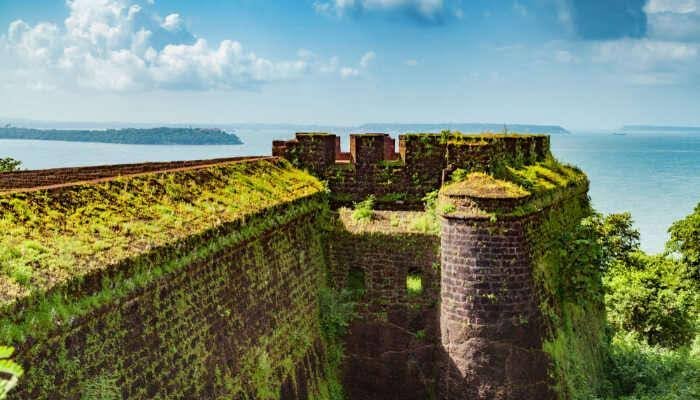
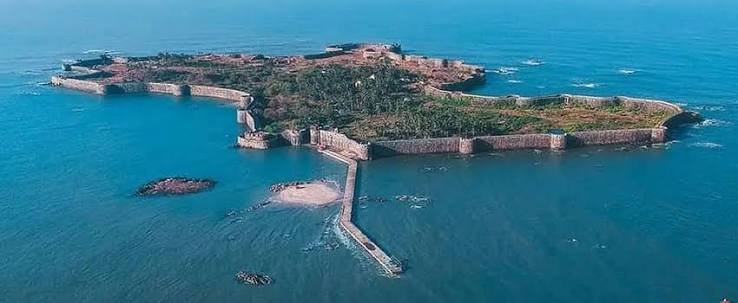
Shivaji Maharaj commissioned Sindhudurg Fort in 1664, and construction was completed within three years, in 1667 — a remarkably fast timeline given the scale of what was built. The fort sits on Kurte Island, roughly 550 metres off the Malvan coast, positioned specifically to guard the Konkan coastline and strengthen Maratha naval power against Portuguese, British, and Siddhi threats operating along the Arabian Sea.
The scale of labor involved was genuinely extraordinary for its time: reports indicate roughly 3,000 workers, 1,000 stone breakers, 200 sculptors, and 100 blacksmiths worked on the project, with Dutch and Portuguese engineers brought in to supervise sections of the construction. Builders used lime, laterite stone, and even molten lead poured directly into the foundations to maximize durability against constant sea exposure — a combination that has kept the walls standing firm against waves and monsoon winds for well over 350 years.
Perhaps the most symbolically significant detail of the entire project: Shivaji reportedly ordered soil brought from various other forts across his kingdom and mixed it into Sindhudurg’s foundation, a deliberate gesture meant to represent the unity and combined strength of the Maratha territories in the very ground the fort stood on.
A Gate You Can’t Find, and a Temple to a Living King
Sindhudurg’s defensive design includes one particularly clever feature: its main entrance, known as Dilli Darwaza, was deliberately built to blend seamlessly into the surrounding walls, making it genuinely difficult for anyone unfamiliar with the fort’s layout to locate from outside. Only those who knew precisely what to look for could identify the gateway, giving defenders a real tactical advantage against any attempted assault.
Inside the walls, the fort’s religious and cultural layout reflects its role as a functioning naval headquarters rather than a purely military outpost.
- Temple dedicated to Shivaji Maharaj — an unusual and genuinely rare structure, preserving the king’s own handprints and footprints set in lime, honoring him directly within his own fortress.
- Temples to Bhavani, Mahadev, and Maruti — additional shrines scattered through the complex, several now partially in ruins but still recognizable.
- Freshwater wells — dug within the fort to sustain the garrison stationed here, a crucial resource given the fort’s isolated island position.
- Residential structures — remnants indicating that Sindhudurg once supported a substantial permanent population, not just a defensive garrison.
The fort’s naval and military significance was tested directly in 1673, during the Battle of Wasagon, fought between Shivaji Maharaj and his son Sambhaji on one side against Vyankoji on the other — a reminder that Sindhudurg functioned as a genuine military headquarters, not just a defensive shell.
Reaching the Fort by Sea
Getting to Sindhudurg is inseparable from the experience itself, since the fort can only be reached by boat from Malvan Jetty.
- The ferry crossing takes roughly 15 minutes each way, offering clear views of the fort’s zigzag bastions rising directly from the water as you approach.
- Ferries operate daily between 9:30 AM and 5:30 PM, but service is suspended entirely during the monsoon months of June through September, when sea conditions become too rough for safe crossing.
- Tickets for both the ferry and fort entry are purchased at the jetty before boarding.
- Local guides are typically available at the fort entrance, offering historical context that’s easy to miss walking through independently.
Sindhudurg Fort Timings
Ferry service, and by extension fort access, runs from 9:30 AM to 5:30 PM daily outside of monsoon season. Since the crossing itself takes time and most visitors want a couple of hours to properly explore the fort grounds, arriving at the jetty by early to mid-morning gives you the most comfortable window before the day gets too hot or crowded.
Sindhudurg Fort Ticket Fee
Visitors should budget for two separate costs:
- Fort entry: approximately ₹50 per person
- Ferry fare: approximately ₹70 per person for the round trip
Given Sindhudurg’s status as a protected ASI monument, these rates are generally stable, though confirming current pricing at the jetty ticket counter before boarding remains a sensible practice.
Best Time to Visit
October through March brings the calmest seas and most reliable ferry service, making it by far the most practical window for a visit — the same period offers the added benefit of clear skies for the panoramic Arabian Sea views from the fort’s ramparts, particularly striking at sunset. Monsoon season, from June through September, should be avoided entirely, since ferry services are suspended altogether during this stretch due to rough sea conditions.
Facts Worth Knowing
- Sindhudurg Fort contains a rare temple dedicated to Shivaji Maharaj himself, preserving his handprints and footprints in lime within his own fortress.
- The fort’s main gate, Dilli Darwaza, was deliberately designed to blend into the surrounding walls, making it nearly impossible for outsiders to locate.
- Roughly 3,000 workers, including 1,000 stone breakers and 200 sculptors, were involved in the fort’s construction between 1664 and 1667.
- Soil from various other forts across the Maratha kingdom was reportedly mixed into Sindhudurg’s foundation as a symbol of unity.
FAQs About Sindhudurg Fort
Q1. Can I visit Sindhudurg Fort during the monsoon season?
No, ferry services to the fort are suspended entirely between June and September due to rough sea conditions, making the fort completely inaccessible during this period regardless of your travel plans.
Q2. How much time should I budget for a proper visit to Sindhudurg Fort?
Including the ferry crossing both ways, most visitors need 3 to 4 hours total to comfortably explore the fort’s temples, walls, and viewpoints without feeling rushed.
Q3. Is Sindhudurg Fort accessible for elderly visitors or those uncomfortable with boat travel?
The 15-minute ferry crossing is generally calm outside monsoon season, but visitors with significant mobility concerns should note that the fort itself involves walking over uneven stone surfaces once ashore.
Q4. Is hiring a local guide at Sindhudurg Fort worth the extra cost?
Many visitors find it genuinely worthwhile, since guides can point out details like the hidden Dilli Darwaza entrance and the Shivaji temple’s preserved handprints that are easy to overlook walking through independently.