Taragarh Fort withstood a siege by Mahmud of Ghazni, one of medieval India’s most feared invaders, forcing him to retreat wounded rather than break through its defenses. That single fact alone sets this hilltop fortress apart from countless other forts that fell to the same conqueror during his repeated campaigns across northern India.
| Quick Overview | Details |
| Location | Nagpahari Hill, Ajmer, Rajasthan |
| Original name | Ajaymeru Durg |
| Meaning of “Taragarh” | Star Fort |
| Built by | Ajaypal Chauhan, founder of Ajmer |
| Construction dated | 1354 AD (some sources cite earlier origins) |
| Height | Approx. 1,300 feet |
| Timings | Daylight hours, verify locally |
| Entry fee | Nominal (camera charges apply) |
The Fort That Repelled Mahmud of Ghazni
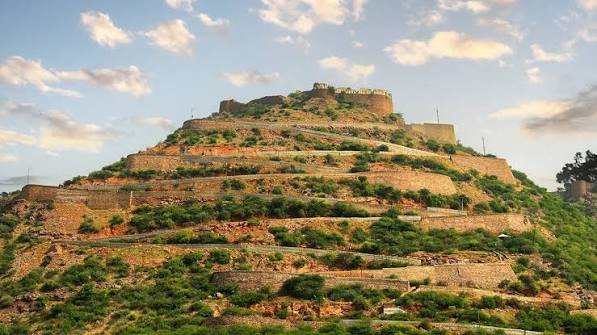
Taragarh Fort was built by Ajaypal Chauhan, the founder of Ajmer city itself, atop the steep Nagpahari Hill, giving the fortress a naturally defensible position overlooking the entire settlement below. Originally named Ajaymeru Durg after its founder, the fort later took on the name Taragarh, meaning “Star Fort,” a reference to its distinctive layout when viewed from above.
The fort’s earliest recorded military triumph came against Mahmud of Ghazni, whose repeated invasions devastated numerous forts and temples across northern India during this period. At Taragarh, however, Ghazni’s siege ended in failure — accounts describe him withdrawing wounded, unable to overcome the fort’s formidable defenses. That resistance held for generations, with the Chauhan dynasty maintaining control until Prithviraj Chauhan, the last Hindu ruler of the fort and one of Indian history’s most celebrated warrior-kings, was finally defeated by Qutb-ud-din Aibak, bringing Chauhan rule at Taragarh to its end.
In a later chapter of the fort’s history, Miran Saheb, serving as governor of Taragarh, sacrificed his life defending the fort against an enemy invasion — an act of loyalty still remembered in local historical accounts of the site.
Six Gates and a Cannon Called Thunder from the Womb
Taragarh’s considerable scale, with battlements stretching roughly 3 km in circumference, reflects genuine Rajput military engineering ambition.
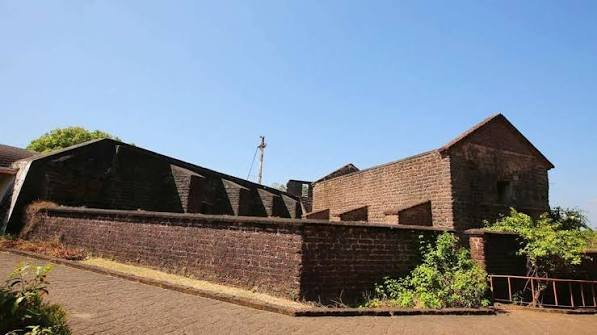
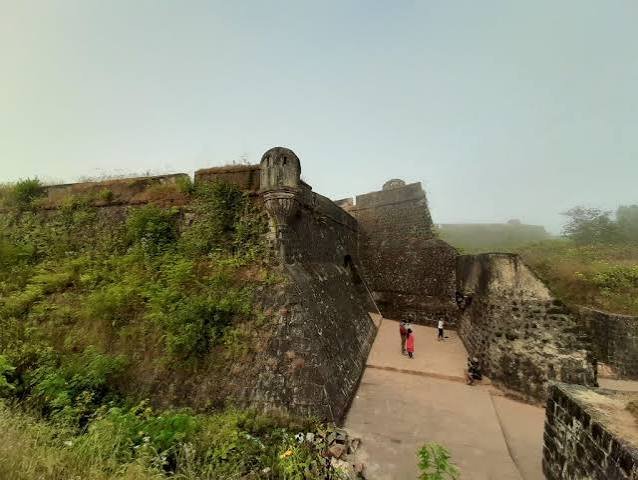
- Six main gateways — Laxmi Pol, Phuta Darwaza, Bada Darwaza, Bhawani Pol, Mathi Pol, and Arkot Darwaza, most now standing in varying states of ruin but still conveying the fort’s original grandeur.
- Bhim Burj — the fort’s largest bastion, dating to the 16th century, once home to a particularly massive cannon named Garbh Gunjam, meaning “Thunder from the Womb,” a fittingly dramatic name for what was reportedly one of the largest cannons of its era.
- Large water reservoirs — carved into the hillside specifically to store rainwater and supply residents during periods of crisis or prolonged siege.
- A network of secret tunnels — once crisscrossing the entire hillside, though these passages are now inaccessible given the absence of reliable maps detailing their original routes.
From Mughal Garrison to British Sanatorium
Following the Chauhan dynasty’s fall, Taragarh Fort continued serving as a strategically important military base through the Mughal era, its elevated position remaining valuable for monitoring and defending the surrounding region. Control later passed through Maratha influence before the British eventually took over Ajmer, at which point Taragarh’s role shifted entirely — the British repurposed the fort as a sanatorium, using its elevated, relatively cooler position as a place of rest and recovery rather than continuing its original military function.
That layered succession — Chauhan stronghold, Mughal garrison, and finally British sanatorium — reflects just how long and varied Taragarh’s active use has genuinely been across more than six centuries.
Taragarh Fort Timings
The fort is generally accessible during standard daylight hours, though confirming current local timings before your visit is worthwhile given some variation in how strictly these are enforced day to day.
Taragarh Fort Ticket Fee
A nominal entry fee applies, with separate charges typically required for camera use. Confirming the exact current rate locally is a sensible step before finalizing your visit plans.
Best Time to Visit and Getting There
October through March brings the most comfortable weather for both the climb and general sightseeing at Taragarh, given how physically demanding the ascent can be during Rajasthan’s harsher summer months. Visitors have two main options for reaching the fort: a serpentine motor road accessible by jeep, or a steep roughly 1.5-hour climb on foot, starting from beyond the Adhai Din ka Jhonpra Mosque. Most visitors spend 1 to 2 hours exploring the fort’s gates, bastions, and viewpoints, which offer sweeping panoramic views over Ajmer city and the picturesque Ana Sagar Lake, itself built by Prithviraj Chauhan’s grandfather, Arnoraja, centuries earlier.
Facts Worth Knowing
- Taragarh Fort withstood a siege by Mahmud of Ghazni, who was forced to retreat wounded rather than breach its defenses.
- Prithviraj Chauhan, the last Hindu ruler of the fort, was ultimately defeated by Qutb-ud-din Aibak, ending Chauhan control of Taragarh.
- The fort’s massive 16th-century cannon, Garbh Gunjam or “Thunder from the Womb,” was mounted on the Bhim Burj bastion.
- The British repurposed the fort as a sanatorium during their occupation of Ajmer, a significant departure from its original military function.
FAQs About Taragarh Fort
Q1. Which is the better way to reach Taragarh Fort — the jeep road or the walking climb?
Both work well depending on your fitness and time; the motor road offers a more relaxed, winding drive, while the roughly 1.5-hour walking climb from near Adhai Din ka Jhonpra Mosque suits visitors wanting a more active, immersive approach to the fort.
Q2. Are the fort’s secret tunnels open for visitors to explore?
No, the tunnel network that once crisscrossed the hillside is currently inaccessible, largely due to the absence of reliable maps detailing their original routes and structural safety concerns.
Q3. How much time should I set aside for a proper visit to Taragarh Fort?
Most visitors need 1 to 2 hours to comfortably explore the main gates, bastions, and viewpoints, with additional time worth allowing for photography given the fort’s panoramic views over Ajmer and Ana Sagar Lake.
Q4. Is Taragarh Fort suitable for visitors interested in a quieter, less crowded heritage site?
Yes, genuinely so — compared to more accessible city monuments in Ajmer, Taragarh sees relatively low visitor density, offering a quieter, more contemplative experience for history enthusiasts.