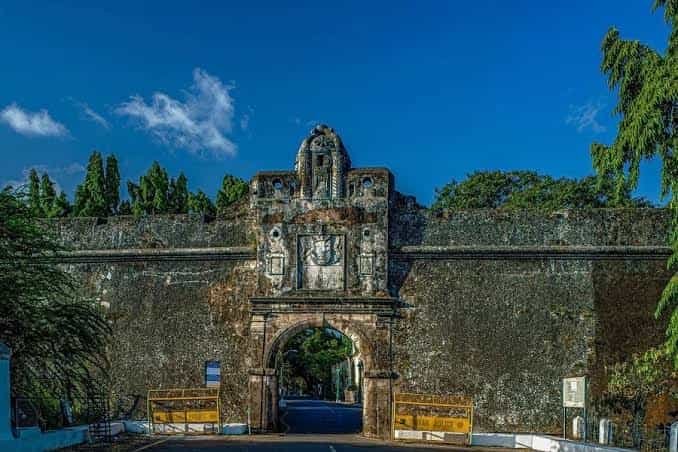
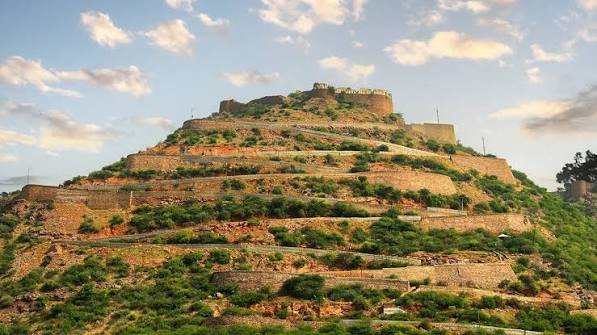
Uparkot Fort predates almost every other fort you’ll find on a typical India travel itinerary by well over a thousand years. Built around 319 BCE by Chandragupta Maurya, founder of the Mauryan Empire, this citadel above Junagadh has survived 16 recorded sieges, served as capital to at least 20 different rulers, and still holds engineering feats — including a stepwell with its own natural cooling system — that genuinely surprise visitors expecting a standard medieval ruin.
| Quick Overview | Details |
| Location | Junagadh, Gujarat |
| Built by | Chandragupta Maurya |
| Year built | Around 319 BCE |
| Wall height | Up to 20 metres (60–70 feet) |
| Timings | 8:00 AM – 6:00 PM, daily |
| Entry fee | ₹25 (Indian), ₹300 (Foreign); free under 15 |
| Sieges withstood | 16 recorded, including a legendary 12-year siege |
| Key attractions | Adi Kadi Vav, Navghan Kuvo, Buddhist caves |
Built by the Founder of an Empire
Uparkot Fort’s origins trace directly to Chandragupta Maurya, who established the citadel around 319 BCE as part of the Mauryan Empire’s expansion into the Saurashtra region. The fort continued in active use through the Gupta period before eventually falling into disrepair once regional capitals shifted elsewhere. Around the 10th century, the ruler Rah Grahar reconstructed the fort from its ruins, restoring it to functioning strength.
What followed was an extraordinary run as one of Gujarat’s most contested strongholds. Historical records place Uparkot as capital to roughly 20 rulers across dynasties including the Mauryas, Guptas, and later Mandlik, Mahipal, Khengar, and Navghan lines, with the Chudasama Rajputs eventually taking firm control. The fort endured 16 documented sieges throughout its history, the last recorded in 1784, and local legend holds that it once withstood a siege lasting a remarkable 12 years — a claim that, true or embellished, reflects just how formidable these walls were considered.
Two Stepwells Carved Into Solid Rock
Among Uparkot’s most celebrated features are its two extraordinary stepwells, both carved entirely from solid rock and designed to ensure a reliable water supply during prolonged sieges.
- Adi Kadi Vav — a 15th-century stepwell descending roughly 170 steps into the earth, cut as a circular shaft reaching about 41 metres deep. The name comes from local legend involving two servant girls, Adi and Kadi, who reportedly fetched water from the well daily; darker versions of the story suggest they may have been sacrificed to secure the well’s water supply.
- Navghan Kuvo — an even older stepwell, dating back roughly 1,000 years to the Chudasama reign, reaching a depth of about 52 metres. Its most striking feature is a magnificent spiral staircase winding around the well shaft itself, along with centuries-old dovecotes still visible in the surrounding stonework.
Both stepwells remain genuinely dramatic descents even today, and visitors are generally advised to carry a torch for the dimmer lower levels, along with caution given the steep, uneven steps.
Caves With Their Own Air Conditioning
Uparkot’s Buddhist caves, also known locally as the Baba Pyara Caves, date back to somewhere between the 2nd and 4th centuries CE, with some accounts tracing their origins even earlier to the era of Emperor Ashoka. Carved deep into the rock across three levels, these caves once served as meditation chambers for Buddhist monks, featuring intricately carved pillars and a genuinely remarkable engineering detail: a natural cooling system built into the caves themselves, using water channeled through carved passages to regulate temperature — an ancient form of air conditioning that still functions in principle today. Six ornately carved pillars mark the caves’ interior, and the serene, cool atmosphere inside offers a striking contrast to Junagadh’s often intense summer heat above ground.
A Palace That Became a Mosque
Within the fort’s walls stands the Jama Masjid, a structure with a genuinely layered past — originally believed to have been a palace, possibly associated with Queen Ranakdevi, before Sultan Mahmud Begada converted it into a mosque during Gujarat Sultanate rule in the 15th century. The tomb of Nuri Shah sits nearby, adding a further layer to the site’s religious history.
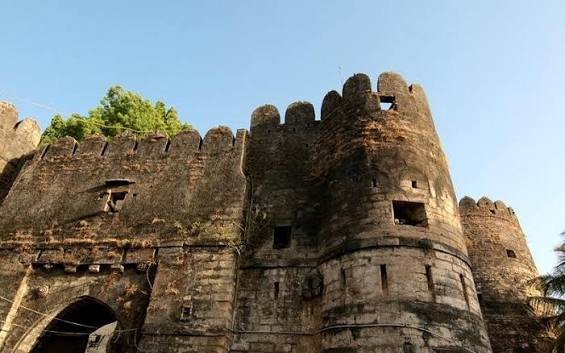
Elsewhere within the complex, visitors can find two historic cannons, Nilam and Kadanal, along with a 17-foot-long cannon on display — features often overlooked by first-time visitors rushing between the more famous stepwells and caves. An ancient Torana, a ceremonial gateway pedestal used for Jain, Hindu, and Buddhist rituals alike, marks the fort’s three successive arched entrance gates, along with old grain storages and a massive water tank built during Nawab rule.
Uparkot Fort Timings
The fort is open daily from 8:00 AM to 6:00 PM, with no weekly closure. Given the considerable ground to cover — stepwells, caves, the mosque, and the fort’s extensive walls — arriving earlier in the day allows a more comfortable, unhurried visit before the afternoon heat intensifies, particularly since the exposed stone surfaces can become genuinely hot in peak summer.
Uparkot Fort Ticket Fee
Entry costs ₹25 for Indian nationals and ₹300 for foreign visitors, with children under 15 admitted free. The single ticket covers the entire fort complex, including both the Adi Kadi Vav and Navghan Kuvo stepwells.
Best Time to Visit and Practical Tips
November through February brings Junagadh’s most comfortable weather, ideal for the walking and stepwell descents that a thorough visit demands. Most visitors need 2.5 to 3.5 hours to properly cover both stepwells, the Buddhist caves, the mosque, and the fort walls without rushing.
- Start with Navghan Kuvo — its dramatic spiral staircase tends to set the tone for the rest of the visit.
- Bring a torch for the dimmer lower sections of both stepwells.
- Visitors with vertigo or knee issues should approach the steep stepwell descents with real caution.
- Supervise children closely near the open stepwell edges.
- Don’t skip the cannons, Nilam and Kadanal — genuinely worthwhile details many first-time visitors miss.
Facts Worth Knowing
- Uparkot Fort was built around 319 BCE by Chandragupta Maurya, making it one of the oldest surviving fortifications in India.
- The fort withstood 16 recorded sieges, with legend describing one lasting an extraordinary 12 years.
- Navghan Kuvo’s spiral staircase, built roughly a thousand years ago, remains one of the most striking stepwell designs in Gujarat.
- The Buddhist caves within the fort feature an ancient water-channel cooling system, a genuine precursor to modern air conditioning concepts.
FAQs About Uparkot Fort
Q1. Are the stepwell descents at Uparkot Fort safe for elderly visitors or those with mobility concerns?
The main fort surface is easily walkable, but the steep, uneven steps descending into Adi Kadi Vav and Navghan Kuvo may not suit visitors with limited mobility or knee issues, so approaching these sections cautiously or skipping them is a reasonable choice.
Q2. How much time should I realistically set aside for a full visit to Uparkot Fort?
Most visitors need 2.5 to 3.5 hours to properly cover both stepwells, the Buddhist caves, the Jama Masjid, and the fort’s walls and cannons without feeling rushed.
Q3. Is Uparkot Fort suitable for a family visit with young children?
Yes, generally, though close supervision is essential near the open stepwell edges and steep descent points, given the considerable depth of both Adi Kadi Vav and Navghan Kuvo.
Q4. Can I combine an Uparkot Fort visit with other Junagadh attractions in the same day?
Yes, easily. Its central location near Junagadh Junction Railway Station and proximity to Girnar Hill make it simple to combine with other regional sightseeing within a single day trip.