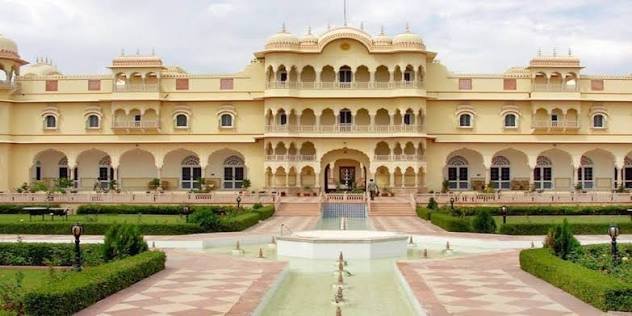
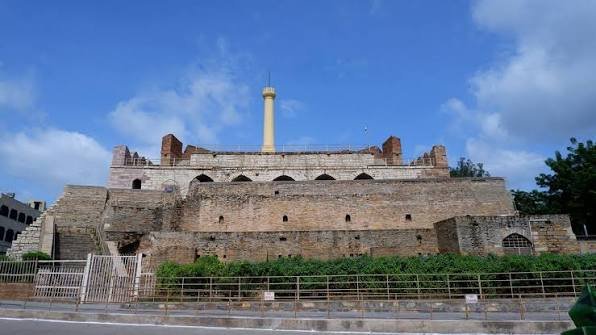
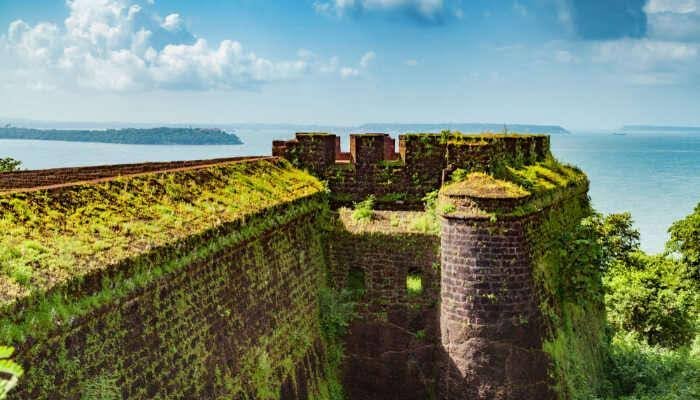
Vasai Fort wasn’t really a fort in the narrow sense at all — it was an entire walled city, home to some 60,000 people at its Portuguese peak, complete with churches, hospitals, colleges, and a governor’s residence. That scale is part of why its ruins, sprawled across 110 acres near the confluence of the Ulhas River, feel less like a single monument and more like an abandoned town slowly being reclaimed by the coastline.
| Quick Overview | Details |
| Location | Vasai, Palghar district, Maharashtra |
| Also known as | Fort Bassein, Fort Baçaim |
| Built by | Portuguese, beginning in the 1530s |
| Original name | Fortaleza de São Sebastião de Baçaim |
| Timings | 6:00 AM – 6:00 PM, all seven days |
| Entry fee | Free |
| Area | Approx. 110 acres |
| Recommended duration | 2.5 to 3 hours |
A City Behind Walls
Vasai’s strategic value was recognized long before the Portuguese ever arrived — as early as the 15th century, it functioned as an important maritime and shipbuilding hub under Bahadur Shah, the Sultan of Gujarat. Drawn by that same strategic and commercial promise, the Portuguese laid siege to the fort in the 1530s and took control by 1534, rebuilding and expanding the existing structure into a formidable coastal stronghold they renamed Fortaleza de São Sebastião de Baçaim.
What followed wasn’t simply a military garrison but a genuine functioning city. Portuguese reports from the period suggest around 60,000 people lived in and around the fort, roughly 2,000 of them Portuguese and the remainder largely Christian Indians. Within the walls stood houses, convents, a town hall, colleges, hospitals, and churches — infrastructure built to support an entire settled population rather than just a defensive garrison. The fort also served as the official residence of the Portuguese governor whenever he visited the region, underlining just how central Vasai had become to Portuguese administration along India’s western coast.
The Battle That Ended Two Centuries of Portuguese Rule
Portuguese control of Vasai held firm for roughly two centuries, until the Maratha Empire, under the leadership of Chimaji Appa — brother of the powerful Peshwa Bajirao I — set their sights on capturing it. The resulting Battle of Vasai stretched from February to May 1739, a prolonged and carefully planned campaign involving an enormous Maratha force, reportedly including 40,000 infantry, 25,000 cavalry, and even war elephants and camels, against the smaller but well-fortified Portuguese garrison.
The Marathas ultimately prevailed, and the fort was formally ceded to the Maratha Empire — a decisive victory still marked today by the Victory Pole standing within the fort grounds, where Maratha forces raised their flag upon capturing the city. A small Hanuman Temple, believed to date from around this same period, is also linked to Chimaji Appa’s presence at the fort.
Vasai’s political significance didn’t end there. In 1802, Peshwa Bajirao II signed the Treaty of Bassein within this same region, an agreement that placed the Maratha Confederacy under British protection and effectively marked the beginning of the end for genuine Maratha political independence. The fort itself, along with the broader Vasai region, was eventually ceded to the British in 1817, closing out its long history as a contested strategic outpost.
Ruins, Weddings, and a Coldplay Video
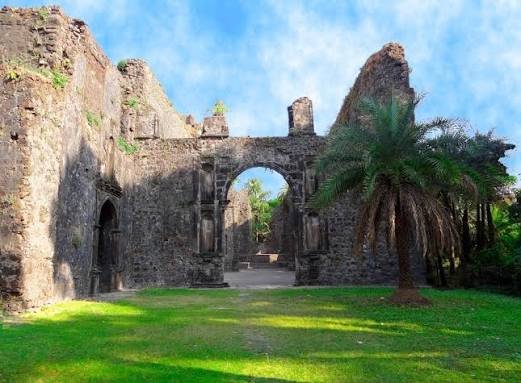
Today, Vasai Fort exists primarily as an atmospheric, heavily overgrown ruin, protected as a monument by the Archaeological Survey of India, though conservation efforts have drawn some criticism from heritage activists over the years regarding restoration quality. What survives offers a genuinely evocative walk through its layered past.
- Anthony’s Church — one of several surviving religious structures within the fort, containing roughly 250 tombstones belonging to Portuguese nobles, many bearing Latin inscriptions.
- The Victory Pole — marking the exact spot where Maratha forces raised their flag after the 1739 conquest.
- Ramparts and watchtowers — largely intact and climbable via internal staircases, offering sweeping views over the surrounding coastline and the confluence of the Ulhas River.
- Old cannons — remnants of the fort’s defensive armament, still scattered along sections of the walls.
- Overgrown structures — the ruins of former convents, administrative buildings, and residential quarters, now heavily reclaimed by vegetation, adding to the fort’s genuinely haunting atmosphere.
That atmosphere has made Vasai Fort a favorite backdrop for both Bollywood productions and international music videos — Coldplay’s “Hymn for the Weekend” was filmed here, alongside Bollywood films including Josh, Aag, and Khamoshi, and song sequences from Pyaar Tune Kya Kiya and Luka Chuppi. The dramatic, weathered arches and watchtowers have also made the fort a genuinely popular spot for wedding and pre-wedding photography shoots.
Vasai Fort Timings
The fort is open daily from 6:00 AM to 6:00 PM, with no weekly closure. Early morning visits offer the most pleasant walking conditions before the day heats up, while the fort’s genuinely atmospheric, overgrown character makes it a rewarding visit at almost any hour within these operating times.
Vasai Fort Ticket Fee
There’s no entry fee at all — Vasai Fort remains completely free to visit, consistent with its status as a protected but lightly commercialized ASI heritage site.
Best Time to Visit
Monsoon season is widely considered the most visually striking time to visit Vasai Fort, when the surrounding vegetation turns vividly green and dramatically contrasts against the fort’s weathered stone ramparts, giving the ruins their most cinematic character. That said, October through February offers considerably drier, more comfortable walking conditions for covering the fort’s substantial 110-acre spread without the slipperiness that monsoon rain brings to its stone pathways.
Facts Worth Knowing
- Vasai Fort once housed roughly 60,000 residents, functioning as a complete Portuguese colonial city rather than a purely military structure.
- Chimaji Appa’s 1739 victory over the Portuguese at Vasai remains one of the notable Maratha military successes of the 18th century.
- The 1802 Treaty of Bassein, signed in this region, marked a pivotal turning point that effectively ended genuine Maratha political independence.
- The fort has served as a filming location for Coldplay’s “Hymn for the Weekend” alongside several major Bollywood productions.
FAQs About Vasai Fort
Q1. Is Vasai Fort safe to explore given how overgrown and ruined many sections are?
Generally yes during daytime hours, though visitors should exercise caution on uneven ramparts and staircases, particularly during or after monsoon rain when surfaces can become slippery.
Q2. How much time should I realistically set aside for a full visit to Vasai Fort?
Most visitors need about 2.5 to 3 hours to comfortably cover the fort’s considerable 110-acre spread, including the church ruins, ramparts, and Victory Pole.
Q3. Is Vasai Fort a good day trip option from Mumbai?
Yes, sitting roughly 50 km north of Mumbai, it makes for a comfortable half-day or full-day outing, easily combined with exploring the broader Vasai-Virar coastal area.
Q4. Can visitors take wedding or pre-wedding photographs at Vasai Fort without special permission?
The fort is a popular and commonly used location for such photography, though for larger commercial shoots or events, checking current ASI guidelines and any required permissions beforehand is a sensible precaution.