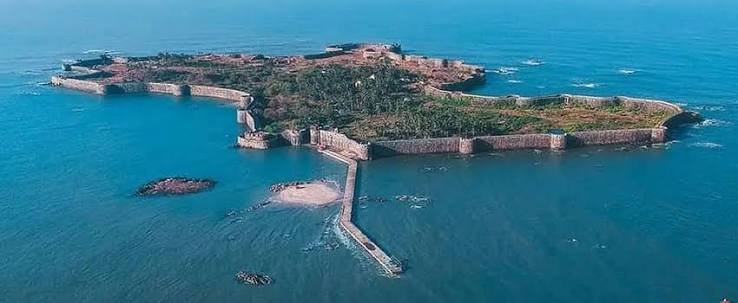
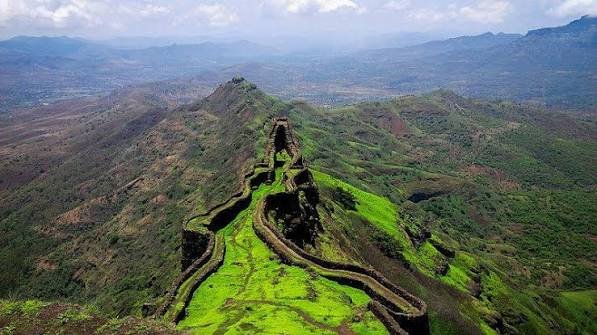
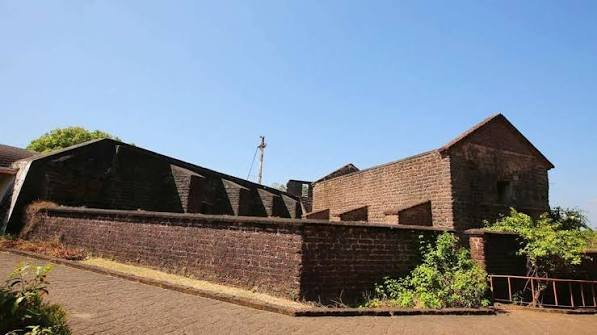
Murud Janjira Fort began, of all things, as a trick. Long before cannons and 40-foot walls made it one of history’s most formidable sea fortresses, this rocky island off the Konkan coast was home to nothing more than a wooden shelter built by local fishermen — and the story of how that shelter became an unconquerable fortress is honestly more interesting than most of what gets written about the fort’s architecture.
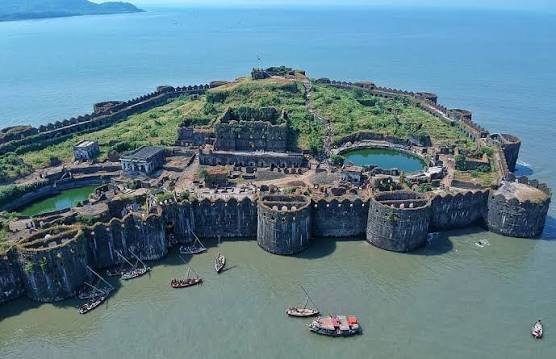
| Quick Overview | Details |
| Location | Murud, Raigad district, Maharashtra |
| Original inhabitants | Koli fishing community |
| Fortress built by | Siddi rulers, under Malik Ambar’s initiative |
| Timings | 7:00 AM – 6:00 PM; boats run narrower hours |
| Entry fee | Free (fort); boat fare separate |
| Related sites | Padmadurg (Kasa Fort), Ahmedganj Palace |
| Status | Never conquered throughout its history |
How a Trick Turned a Fishing Village Into a Fortress
The island’s first inhabitants were the Koli community, fishermen who built a simple wooden structure here to protect themselves from pirate raids along the coast. That modest setup caught the attention of the Nizam Shahi Sultanate of Ahmednagar, who recognized the island’s strategic value for controlling coastal trade and naval movement.
Rather than launching an outright assault, the Sultanate’s general, Piram Khan, is said to have deceived the Koli fishermen into handing over control of the island. Once secured, Malik Ambar — the influential Abyssinian regent serving the Ahmednagar Sultanate — commissioned the construction of a proper stone fortress in place of the original wooden garrison. His subordinate, Siddi Ambar, took charge of the completed fort and became known as the first Nawab of Janjira state, establishing a Siddi dynasty that would rule the island for centuries.
From that point on, Janjira became something unusual in Indian history: a small, semi-independent state ruled by African-origin Siddi Nawabs, sitting just off the Konkan coast and answering to no one who tried to take it by force.
The Fort Nobody Could Copy
Janjira’s reputation for being unconquerable frustrated more than one powerful ruler, and the most telling response came from the Marathas themselves. After repeated failed attempts to capture the island fort directly, Sambhaji Maharaj — and by some accounts, Shivaji before him — decided the better strategy was to build a rival fortress nearby rather than keep attacking Janjira head-on.
The result was Padmadurg, also known as Kasa Fort, constructed roughly 4 kilometres northwest of Janjira in 1676. Spanning about nine acres, it was meant to challenge Janjira’s naval dominance and served for a time as a shipbuilding yard during Shivaji’s reign. It never quite matched its rival, though — Padmadurg eventually fell into disuse partly because it lacked a reliable freshwater source, something Janjira had in abundance thanks to a deep well that reportedly yielded sweet water even during prolonged sieges. Today, Padmadurg sits largely in ruins, accessible only with special permission from local authorities, and is rarely visited compared to Janjira itself.
Beyond the Island: Ahmedganj Palace and the Nawab’s Legacy
Not everything connected to Janjira’s history sits on the island. On the mainland at Murud stands Ahmedganj Palace, also known as Nawab Palace, built in 1885 in a striking mix of Gothic and Mughal architectural styles across roughly 45 acres. This became the residence of the Siddi Nawabs once their focus shifted toward the mainland, and it remains connected to their descendants even today — the palace gates still carry the official seal of the former Janjira state.
The palace grounds also include a mosque and royal tombs, including that of Sidi Kasim, better known as Yakut Khan, a notable Siddi commander who held authority over both Janjira and, at one point, the Mughal fleet. Nearby, the Garambhi Dam, built by Nawab Sir Siddi Ahmed Khan and dedicated to Queen Victoria, still serves as the region’s main freshwater supply — a reminder of how the Siddi rulers’ influence extended well beyond the fort walls into the everyday infrastructure of the area.
Murud Janjira Fort Timings
The fort itself is generally accessible from 7:00 AM to 6:00 PM, though the actual visiting window depends heavily on boat operating hours. Ferries from Rajapuri jetty typically run between 8:00 AM and 4:30 PM, and it’s wise to reach the jetty with plenty of time to spare, since boat operators stop crossings well before the fort’s official closing time to ensure everyone gets back safely before dark.
Murud Janjira Fort Ticket Fee
There’s no entry fee for the fort itself, consistent with its status as an ASI-managed site. Costs come entirely from the boat crossing:
- Small shared boats: roughly ₹20 to ₹100 per person
- Larger boats or private charters: ₹100 to ₹300 per person
- Vehicle parking near the jetty: around ₹30
- Optional local guides at the fort gate: negotiable, typically a few hundred rupees
Prices tend to shift with season and crowd size, so a quick negotiation with boatmen at Rajapuri jetty is standard practice rather than an unusual haggle.
Getting There and Nearby Stops
Most visitors reach Murud via road, with Roha serving as the nearest railway station before a further drive to the coast. Once at Murud, combining a Janjira visit with a look at Ahmedganj Palace on the mainland makes for a fuller day, connecting the island’s military history with the more domestic, dynastic side of the Siddi Nawabs’ story. Nearby Kuda caves, a set of Buddhist rock-cut caves, are another option for travellers looking to extend their visit beyond the fort itself.
Facts Worth Knowing
- Janjira’s original name was Jazeera Mahroob Jazeera, later shortened and adapted into “Janjira” over time.
- The fort supported a genuinely diverse population historically, including Arabs, Europeans, and Siddi settlers living within its walls.
- Padmadurg, the rival Maratha fort built to challenge Janjira, ultimately failed to match it, partly due to its lack of a freshwater source.
- The Siddi Nawab lineage at Janjira persisted for centuries, with descendants still connected to Ahmedganj Palace today.
FAQs About Murud Janjira Fort
Q1. Can visitors also see Padmadurg (Kasa Fort) during a Janjira trip?
It’s possible but not straightforward — Padmadurg requires special permission to visit and is accessible mainly through local fishermen’s boats, unlike Janjira’s regular ferry service. Most casual visitors view it only from a distance.
Q2. Is Ahmedganj Palace open to the public like the fort itself?
Not fully. The palace remains connected to the Nawab’s descendants and is often gated and restricted, so visitors typically view it from outside rather than touring the interior freely.
Q3. Why did the Marathas fail to capture Janjira despite repeated attempts?
A combination of factors worked against them — the fort’s naval-focused defenses, its reliable freshwater well during sieges, and the Siddis’ strong maritime capabilities all made direct assault extremely difficult to sustain.
Q4. Is a single day enough to cover both the fort and the mainland sites like Ahmedganj Palace?
Yes, for most travellers. A morning boat trip to the fort followed by an afternoon stop at Ahmedganj Palace and the surrounding Murud area comfortably fits into one full day.