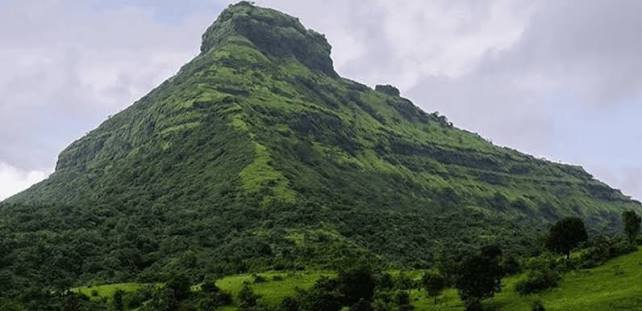
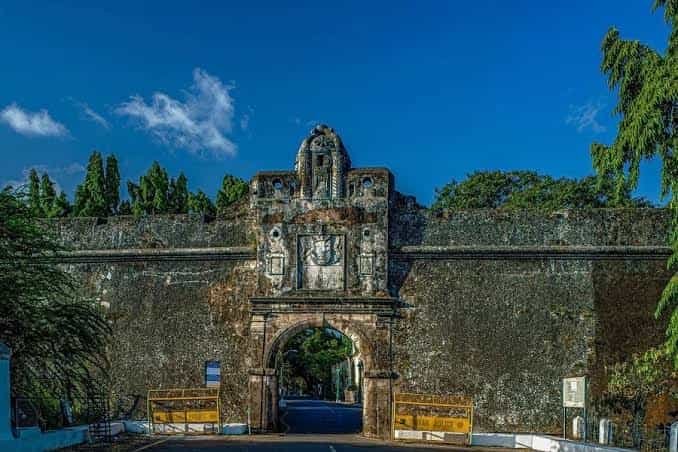
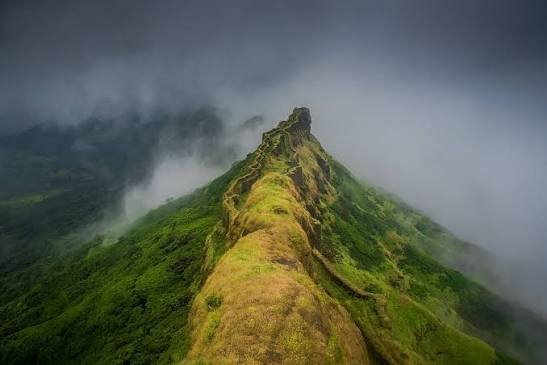
Rachakonda Fort was built by a general who simply decided he didn’t need an emperor anymore. When the Kakatiya dynasty collapsed in 1323, Recherla Singama Nayak, a military commander who had faithfully served that fallen empire, declared his own independence and built this hilltop stronghold as the capital of an entirely new dynasty — a genuinely bold move that turned a soldier into a founding king.
| Quick Overview | Details |
| Location | Rachakonda village, Nalgonda district, Telangana |
| Built by | Recherla Singama Nayak, Padma Nayaka (Velama) dynasty |
| Century built | 14th century (approx. 1360 AD) |
| Distance from Hyderabad | Approx. 60 km |
| Timings | Daylight hours, no fixed schedule |
| Entry fee | Free |
| Architecture style | Cyclopean masonry (no mortar) |
| Temples within fort | 18+, mostly Shiva shrines |
Built by a Kakatiya General Who Declared Independence
Recherla Singama Nayak had served as a military commander under the Kakatiya dynasty, one of several such generals who helped hold the empire together during its final turbulent decades. When the Kakatiyas fell in 1323 following sustained pressure from the Delhi Sultanate, Singama Nayak seized the opportunity to establish his own line of rulers, founding the Recherla Padmanayaka dynasty — also known as the Velama rulers — with Rachakonda as their capital, marking a shift from the earlier capital at Anumagallu.
The Padmanayakas held considerable regional power across Telangana during the late 14th and early 15th centuries, maintaining Rachakonda as their primary base while also establishing a second stronghold at nearby Devarakonda. That regional dominance ended in 1433, when the Bahmani Sultanate conquered Rachakonda, bringing the Padmanayaka dynasty’s independent rule to a close. Control subsequently passed to the Qutb Shahi dynasty and eventually the Nizams of Hyderabad, each adding their own chapter to the fort’s long administrative history even as its original defensive relevance faded.
Stone Fitted Without a Single Drop of Mortar
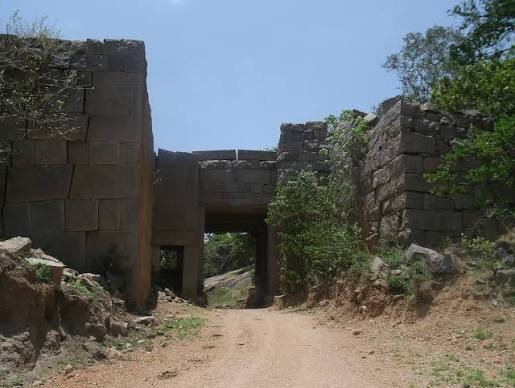
Rachakonda’s most distinctive architectural feature is its cyclopean masonry — massive, irregularly shaped stones fitted together with such precision that no mortar was needed to hold the structure in place. This construction technique, a genuine hallmark of medieval Deccan hill fort architecture, has allowed sections of the fort to survive largely intact across nearly seven centuries, even as the site fell into general disrepair and ruin.
Local folklore adds a darker layer to the fort’s story: persistent legend holds that a woman wronged by the Velama rulers cursed the dynasty, a tale still recounted by locals as part of the fort’s broader oral history, though the specifics have blurred somewhat with retelling over the generations. Whether or not the curse holds any literal truth, the dynasty’s relatively brief century-long tenure at Rachakonda has certainly fueled the legend’s staying power.
A Climb With No Marked Path
What genuinely sets a Rachakonda visit apart from most fort treks is the complete absence of a defined route to the summit. Visitors must scramble up the rocky hillside and navigate scattered boulders largely on their own judgment, without marked trails or directional signage guiding the way — a detail that makes the climb feel considerably more like genuine adventure trekking than a standard heritage walk.
Once at the top, the fort reveals a two-stage layout, divided into upper and lower sections, entered through gateways supported by a distinctive pattern of monolithic stone pillars and horizontal beams.
- 15-foot entrance wall — the fort’s imposing first line of defense, built using the same mortar-free cyclopean technique found throughout the site.
- Two ancient Sri Rama temples — among the fort’s oldest surviving religious structures.
- 18-plus temples in total — scattered throughout the complex, with the majority dedicated to Lord Shiva, including the Ramalingeshwara Swamy, Munmandabam, and Veerabhadra Swamy temples.
- Naturally carved water tanks — providing the fort’s historical water supply, still visible among the ruins today.
- Panoramic views — from the southeastern corner of the fort, offering a sweeping look over the surrounding plains and hills.
Rachakonda Fort Timings
There’s no formal opening or closing schedule, given the fort’s status as a lightly managed heritage and trekking site. Visitors are generally free to explore during standard daylight hours, though starting the climb earlier in the day is genuinely advisable given the complete lack of a marked trail and the exposed, rocky terrain.
Rachakonda Fort Ticket Fee
There’s no entry fee to visit Rachakonda Fort, and no facilities of any kind exist on-site, meaning visitors should come fully prepared with their own water and supplies.
Best Time to Visit and Getting There
October through February brings the most comfortable trekking conditions, given the fort’s completely exposed rocky terrain with no shade along the climb. The fort sits roughly 60 km from Hyderabad and about 66 km from Nalgonda, making it accessible as a day trip by private vehicle, though public transport options to the immediate site remain limited.
Facts Worth Knowing
- Rachakonda Fort was founded by Recherla Singama Nayak, a former Kakatiya military commander who declared independence following the Kakatiya dynasty’s fall in 1323.
- The fort’s cyclopean masonry, built entirely without mortar, remains one of the clearest surviving examples of this medieval Deccan construction technique.
- The Padmanayaka dynasty also maintained a second stronghold at nearby Devarakonda alongside their Rachakonda capital.
- Unlike most trekking destinations, Rachakonda Fort has no marked or defined path to the summit, requiring visitors to navigate the rocky hillside independently.
FAQs About Rachakonda Fort
Q1. Is the Rachakonda Fort climb safe for someone without prior trekking experience?
It’s manageable for reasonably fit beginners, but given the complete absence of a marked trail and the rocky, boulder-strewn terrain, going with an experienced group or guide is genuinely advisable for first-timers.
Q2. Are there any facilities like water or food available near Rachakonda Fort?
No, there are no facilities of any kind on-site, so carrying sufficient water and snacks is essential before beginning the climb.
Q3. Can Rachakonda Fort be combined with a visit to Devarakonda in the same trip?
Yes, given their shared history as twin strongholds of the same Padmanayaka dynasty, some travelers choose to combine both destinations, though they should plan for the additional driving distance between the two sites.
Q4. Is Rachakonda Fort suitable for a family day trip from Hyderabad?
It’s better suited to travelers comfortable with genuine off-trail scrambling and rugged terrain, making it more appropriate for adventure-minded visitors or older children rather than a casual family outing with young kids.