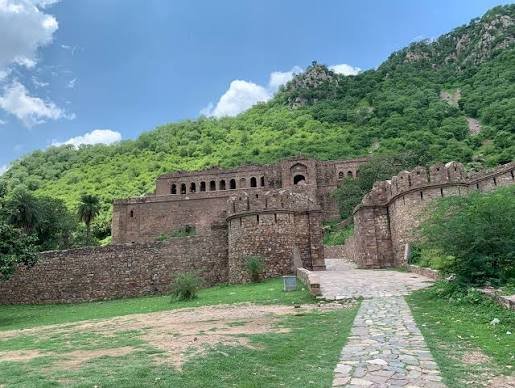
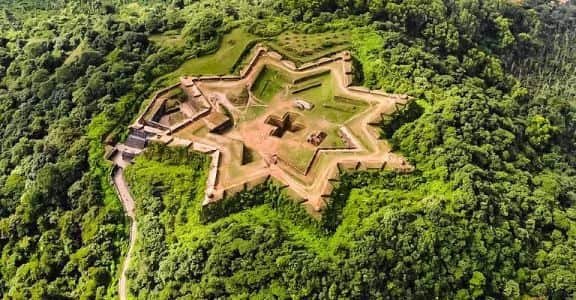
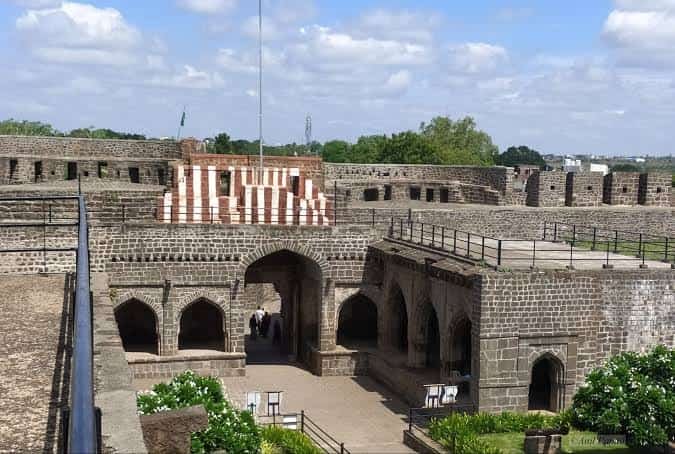
Rajmachi Fort breaks the usual rule of Sahyadri trekking — instead of one summit, one climb, one payoff, this destination hands you two entirely separate forts to conquer in a single trip. Shrivardhan and Manaranjan sit on twin peaks connected by a shared plateau, and together they’ve made Rajmachi one of the most popular weekend escapes for trekkers from both Mumbai and Pune.
| Quick Overview | Details |
| Location | Between Lonavala and Karjat, Sahyadri range |
| Twin forts | Shrivardhan (2,710 ft) and Manaranjan (2,510 ft) |
| Original builders | Satavahanas |
| Captured by Shivaji | 1657 CE |
| Timings | Generally 24-hour access; 6:00 AM – 6:00 PM recommended |
| Entry fee | Free |
| Base village | Udhewadi |
| Trek distance | Approx. 16 km from Lonavala |
Guarding the Bor Ghat Since the Satavahanas
Rajmachi’s strategic value comes down to geography: the fort complex overlooks Bor Ghat, the historic mountain pass connecting Khopoli and Khandala along what remains today the Mumbai-Pune route. That corridor made whoever controlled Rajmachi effectively the gatekeeper of trade and troop movement between the Konkan coast and the Deccan plateau — a role the fort held for an extraordinarily long stretch of Indian history.
The original fortification here is credited to the ancient Satavahana dynasty, giving Rajmachi roots stretching back nearly two thousand years before its more famous Maratha-era chapter. Shivaji Maharaj captured Rajmachi in 1657, taking it along with several neighboring forts from the Adilshahi rulers of Bijapur. Mughal emperor Aurangzeb briefly seized control in 1704, but the Marathas recaptured it the very next year. In 1713, Chhatrapati Shahu Maharaj handed control of Rajmachi to Kanhoji Angre, the legendary Maratha naval commander whose fleet dominated the western Indian coastline for decades — a notable connection linking this inland fort to one of Maratha India’s most celebrated maritime figures. The fort also played a strategic role during the First Anglo-Maratha War, before finally passing to British control in 1818 following the broader collapse of Maratha power.
Two Forts, Two Routes
Rajmachi’s twin-peak layout means visitors effectively choose between two different climbing experiences, both reachable from the shared base village of Udhewadi.
- Manaranjan Fort — the shorter climb of the two, typically taking 20 to 30 minutes to reach the top from the junction point.
- Shrivardhan Fort — the taller and more substantial of the pair, generally requiring around 50 minutes up plus additional time to properly explore the summit ruins.
Reaching Udhewadi itself also involves a genuine choice of approach:
- The Lonavala route — longer at roughly 16 km, but considerably gentler, following flat mud trails through the Shirota forest before arriving at the base.
- The Karjat route — starting from Kondiwade village, this path is steeper and shorter, but passes through ancient Buddhist rock-cut caves and the dense forest of the Ulhas River valley along the way.
Most one-day visitors from Pune or Mumbai treat the full round trip as a roughly 12-hour undertaking, while those wanting a fuller experience opt for an overnight camping stay instead.
Caves, Temples, and Fireflies
Beyond the two fort summits themselves, Rajmachi’s broader trail and plateau area hold several genuinely worthwhile stops.
- Kondana Caves — a set of ancient Buddhist rock-cut caves encountered along the Karjat approach route, predating the fort’s medieval military history by centuries.
- Hemadpanti-style Shiva Temple and Kaal Bhairav Temple — smaller shrines along the trekking path, reflecting the plateau’s continued religious use over time.
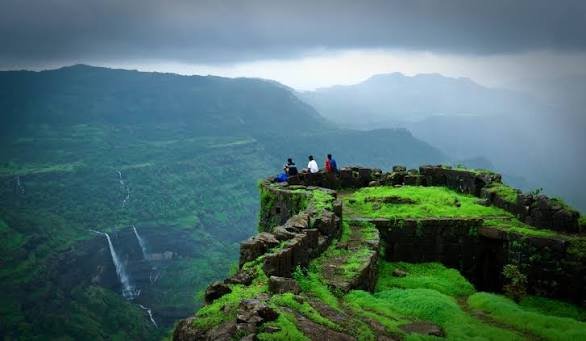
- Ramparts and gateways — surviving sections of both Shrivardhan and Manaranjan’s original fortifications, still traceable despite centuries of weathering.
- Kataldhar Waterfall — visible from Shrivardhan Fort specifically during monsoon season, adding a dramatic seasonal element to the summit views.
- Rajmachi Point — a popular viewpoint near Khandala, visible directly from the Mumbai-Pune Expressway, offering a clear look at the twin forts before you even begin the trek.
- Firefly watching — a seasonal nighttime activity that draws visitors specifically for overnight camping trips, adding a genuinely magical dimension to a stay at Udhewadi.
Rajmachi Fort Timings
The fort area is generally accessible around the clock, though most sources recommend treating 6:00 AM to 6:00 PM as the practical daylight window for trekking. Given the full round trip typically takes around 12 hours from Pune or a comparable stretch from Mumbai, starting early in the morning is essential for a comfortable single-day visit.
Rajmachi Fort Ticket Fee
There’s no entry fee to visit Rajmachi Fort or trek to either of its twin peaks. Costs generally arise only from optional guided trekking and camping packages, which typically range from around ₹500 to ₹1,499 per person depending on inclusions like food, camping arrangements, and transportation from Lonavala or Pune.
Best Time to Visit
Monsoon season, from June through September, is widely considered Rajmachi’s most visually spectacular window, when the surrounding hills turn vividly green and the Kataldhar Waterfall becomes fully visible from Shrivardhan Fort. Winter and summer months, by contrast, are the only seasons when overnight camping at Udhewadi is typically available, making them the better choice for anyone specifically planning a multi-day trip with an overnight stay and firefly watching.
Facts Worth Knowing
- Rajmachi Fort’s original fortifications are credited to the ancient Satavahana dynasty, giving the site a history stretching back nearly two thousand years.
- In 1713, the fort was handed to Kanhoji Angre, the celebrated Maratha naval commander, linking this inland stronghold to one of the era’s most significant maritime figures.
- Rajmachi consists of two independent forts, Shrivardhan and Manaranjan, both accessible from the same base village of Udhewadi.
- The fort played a strategic role during the First Anglo-Maratha War before finally passing to British control in 1818.
FAQs About Rajmachi Fort
Q1. Should I take the Lonavala route or the Karjat route to reach Rajmachi Fort?
The Lonavala route is longer but gentler, suited to first-time trekkers, while the Karjat route is steeper and shorter, offering the added attraction of passing through the ancient Kondana Caves along the way.
Q2. Is it possible to climb both Shrivardhan and Manaranjan forts in a single day trip?
Yes, most visitors comfortably climb both, since they share the same base junction at Udhewadi, with Manaranjan taking 20 to 30 minutes and Shrivardhan around 50 minutes to reach the top.
Q3. Is overnight camping at Rajmachi Fort available year-round?
No, camping at Udhewadi village is generally available only during winter and summer months, not during monsoon season, so plan accordingly if an overnight stay is part of your itinerary.
Q4. Is the Rajmachi trek suitable for beginners, or does it require prior trekking experience?
It’s widely regarded as beginner-friendly, particularly via the Lonavala route, though reasonable fitness is still needed given the full round trip’s considerable distance and duration.