Ratnadurg Fort didn’t just watch over Ratnagiri city — it gave the city its name. This horseshoe-shaped coastal stronghold, wrapped on three sides by the Arabian Sea, has stood here since the 16th century, and Ratnagiri’s own identity is drawn directly from the fort that has always dominated its skyline.
| Quick Overview | Details |
| Location | 2–4 km from Ratnagiri city center |
| Also known as | Bhagwati Fort |
| Built by | Bijapur Sultanate |
| Century built | 16th century |
| Captured by Shivaji | 1670 |
| Area | Approx. 120 acres |
| Timings | 7:00 AM – 6:00 PM (fort); 4:00–5:30 PM (lighthouse) |
| Entry fee | Free (lighthouse: ₹10–25) |
The Fort That Named a City
Ratnadurg Fort’s origins trace back to the Bijapur Sultanate during the 16th century, though its real historical significance began in 1670, when Chhatrapati Shivaji Maharaj captured it after defeating the forces of Adil Shah of Bijapur. Following that conquest, Shivaji strengthened the fort’s defenses, building a protective tower near its southern edge alongside what became known as the Old Court House, both of which served as key commanding points overlooking the surrounding coastline.
The fort’s naval significance grew considerably in the following decades. Between 1750 and 1755, Kanhoji Angre, the celebrated Maratha admiral whose naval command shaped much of the western Indian coast’s defense during this period, undertook improvements to the fort’s citadel defenses, cementing Ratnadurg’s role as an important naval position for the Maratha fleet. The British eventually captured the fort in 1818, and in a genuinely notable act of preservation rather than destruction, they repaired and rebuilt the temple dedicated to Goddess Bhagwati that had existed at the site since Shivaji’s time — a restoration significant enough that the fort came to be known popularly as Bhagwati Fort, a name that persists alongside “Ratnadurg” today. Ratnagiri city itself takes its name directly from this fort, a connection that makes Ratnadurg far more than just a scenic ruin — it’s genuinely woven into the city’s own identity.
A Horseshoe on the Arabian Sea
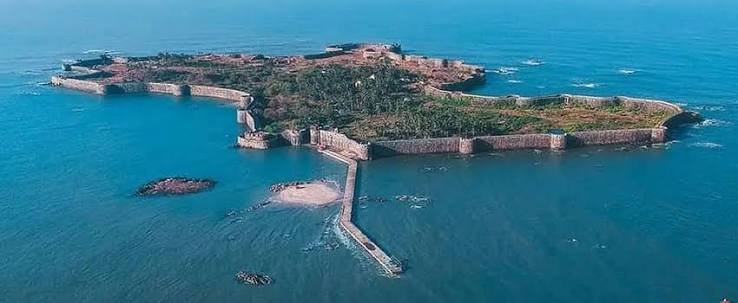
Ratnadurg’s most distinctive physical feature is its horseshoe-shaped layout, formed by a hill that extends directly into the Arabian Sea, leaving the fort surrounded by water on three sides and connected to the mainland only on the fourth. That geography gives the fort both genuine natural defensive advantage and some of the most striking panoramic coastal views in the entire Konkan region.
- Seven bastions (Buruj) — each offering a distinct vantage point over the Arabian Sea, with the massive laterite stone walls connecting them still largely intact.
- Bhagwati Devi Temple — the fort’s spiritual heart, brightly painted and well-maintained, drawing both devout locals and curious visitors into its peaceful courtyard.
- A functional lighthouse — positioned on the fort’s southern edge, known as Parkot, still actively guiding ships along this stretch of coastline today.
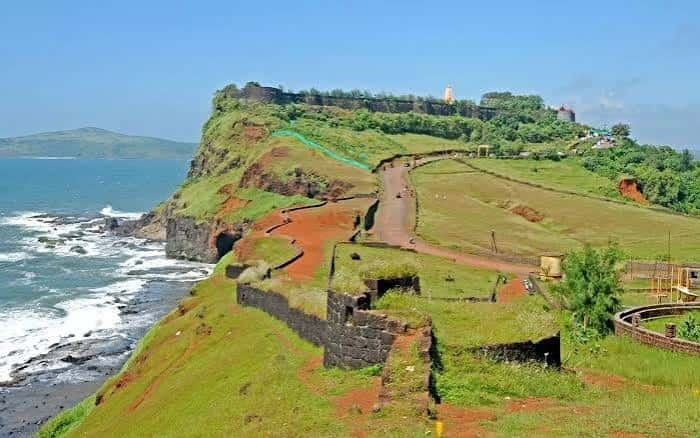
- Kadelot Point — a dramatic cliffside spot historically believed to have been used for administering punishment in earlier eras, now more commonly visited for its striking views of waves crashing against the rocks below.
- Ancient caves and ruins — scattered beneath and around the fort, adding an atmospheric, mysterious layer to a visit.
- A pond and well — remnants of the fort’s original water infrastructure, still visible within the grounds.
Ratnadurg Fort Timings
The fort is generally open daily from 7:00 AM to 6:00 PM, offering visitors a wide window for exploring its walls, bastions, and the Bhagwati Temple. The adjoining lighthouse operates on a considerably narrower schedule, typically open for public climbing only between 4:00 PM and 5:30 PM, so timing your visit specifically around this slot is essential if reaching the lighthouse summit is a priority.
Ratnadurg Fort Ticket Fee
Entry to both the fort and the Bhagwati Temple is completely free for all visitors. The lighthouse charges a minimal fee, generally in the range of ₹10 to ₹25, when its public climbing window is open. No official fee applies for personal photography, though professional equipment may require separate permission from the Archaeological Survey of India or local authorities.
Best Time to Visit and Getting There
October through February brings Ratnagiri’s most comfortable weather for exploring the fort’s exposed coastal walls and bastions, while early morning, roughly 7:00 to 9:00 AM, is widely considered the ideal window regardless of season, offering both cooler temperatures and the best light for photography. Summer months bring considerable daytime heat, making early visits particularly worthwhile between March and May. The fort sits just 2 to 4 km from central Ratnagiri, making it an easy, quick trip by taxi, auto-rickshaw, or on foot for those staying nearby.
Facts Worth Knowing
- Ratnagiri city takes its name directly from Ratnadurg Fort, making the fort inseparable from the city’s own identity.
- Kanhoji Angre, the renowned Maratha naval admiral, improved the fort’s citadel defenses between 1750 and 1755, reinforcing its role as a key naval position.
- The fort’s popular alternate name, Bhagwati Fort, comes from the British-era restoration of the Bhagwati Devi Temple within its walls.
- Ratnadurg’s distinctive horseshoe shape results from a hill extending directly into the Arabian Sea, surrounding the fort with water on three sides.
FAQs About Ratnadurg Fort
Q1. Can I visit both the fort and the lighthouse in a single trip, given the lighthouse’s limited hours?
Yes, most visitors explore the fort’s walls, bastions, and Bhagwati Temple first, then time their arrival at the lighthouse specifically for its 4:00 to 5:30 PM window to complete both in one visit.
Q2. Is Ratnadurg Fort suitable for a family visit with children?
Yes, generally, given its relatively open, walkable layout, though supervision near Kadelot Point and the unguarded cliffside sections is genuinely advisable for families with young children.
Q3. How much time should I set aside for a proper visit to Ratnadurg Fort?
Most visitors need 1.5 to 2.5 hours to comfortably explore the fort’s seven bastions, the Bhagwati Temple, and the surrounding ruins, with additional time worth allowing if you’re also planning to climb the lighthouse.
Q4. Is Ratnadurg Fort easy to combine with other Ratnagiri attractions in the same day?
Yes, its central location just a few kilometres from the city makes it simple to pair with nearby spots like Thibaw Point, Bhatye Beach, and the Ratnagiri Marine Museum for a fuller day of local sightseeing.