Reis Magos Fort takes its name from the Biblical Three Wise Men, the Magi who traveled to visit the infant Jesus — a fittingly poetic name for a fort that has, over more than five centuries, survived Maratha attacks, served as both a prison and a hospital, fallen into near-total ruin, and finally been reborn as one of Goa’s most compelling cultural spaces.
| Quick Overview | Details |
| Location | Verem, Bardez, North Goa, on the banks of the Mandovi River |
| Earliest fortification | 1493, under Adil Shah of Bijapur |
| Rebuilt by Portuguese | 1551–1554, Viceroy Afonso de Noronha |
| Timings | 9:30 AM – 5:00 PM, Tuesday to Sunday (closed Mondays) |
| Entry fee | ₹50 (adults), ₹25 (children/students), ₹10 on Sundays |
| Restored and reopened | June 2012 |
| Known for | Cultural exhibitions, Mario Miranda gallery, Mandovi River views |
Named After the Three Kings
The very earliest fortification on this site dates back to 1493, built by Ismail Adil Shah, the Sultan of Bijapur, though some accounts suggest an even older Hindu temple once stood here before being destroyed. That original structure was relatively modest, but its strategic position — commanding the mouth of the Mandovi River — made it valuable enough that the Portuguese, once they arrived in Goa, took a serious interest in fortifying it properly.
The name Reis Magos itself, meaning “Three Wise Men” or “Three Kings,” references the Biblical Magi who visited the newborn Jesus, and it’s tied directly to the nearby Reis Magos Church, built in the 1550s, which remains dedicated to the same three kings and still celebrates the Feast of the Three Wise Men, Festa dos Reis Magos, every January 6th.
Rebuilt by the Portuguese, Tested by the Marathas
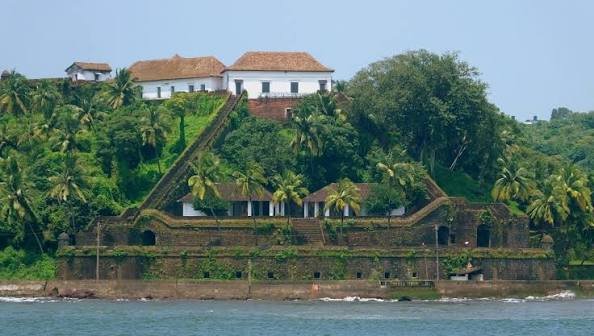
Portuguese Viceroy Afonso de Noronha oversaw the fort’s major reconstruction between 1551 and 1554, transforming it into a proper defensive stronghold built specifically to guard the entrance to the Mandovi River and protect the capital of Panaji from any approach by sea. The fort was rebuilt again in 1703, reinforcing its walls and defenses further, work that would prove critical just a few decades later.
In 1739, the fort faced a serious test when Maratha forces launched a major offensive against Portuguese territories in Goa. In the aftermath of that campaign, only two forts remained in Portuguese hands — Reis Magos and Aguada — a genuinely significant marker of how effectively this particular fortification had held its ground. Built from durable laterite stone with thick, steeply sloping walls designed to withstand cannon fire, the fort also included a freshwater spring within its grounds and a network of underground rooms and passages, allowing it to function independently during extended periods of conflict.
From Prison to Cultural Landmark
The fort’s role shifted considerably in the centuries that followed. At various points it served as a jail and later as a hospital, functions quite far removed from its original military purpose. Following Goa’s liberation from Portuguese rule in 1961, the fort passed into the hands of the Government of Goa — but without consistent maintenance, it gradually crumbled, its walls overtaken by vegetation and its interiors reduced to little more than rubble for decades.
The turning point came in the early 2000s, when INTACH (the Indian National Trust for Art and Cultural Heritage), the Government of Goa, and the Helen Hamlyn Trust joined forces on a major restoration project. Under the architectural direction of Gerard da Cunha, the fort was painstakingly rebuilt using traditional methods and locally sourced materials, with work formally beginning around 2008. The restored fort finally reopened to the public in June 2012, reimagined not as a ruin frozen in time but as a genuinely active Cultural and Heritage Centre.
That transformation is very much visible in what the fort offers today:
- Art exhibitions and cultural events — regularly hosted within the restored galleries and courtyards.
- The Mario Miranda exhibit — a dedicated section showcasing works by one of Goa’s most beloved cartoonists, whose playful, distinctive illustrations of Goan life have become iconic across India.
- Archival photographs and historical displays — tracing the fort’s journey from Bijapur-era fortification through Portuguese rule to its modern restoration.
- Educational programs — hosted periodically for students and heritage enthusiasts, reflecting the fort’s ongoing role as a living cultural institution rather than a static monument.
Reis Magos Fort Timings
The fort is open from 9:30 AM to 5:00 PM, Tuesday through Sunday, with Mondays reserved as a weekly closure day. Given the fort’s elevated position overlooking the Mandovi River, arriving in the late afternoon, closer to closing time, rewards visitors with particularly striking views as the light softens over the water.
Reis Magos Fort Ticket Fee
Current pricing is generally consistent across sources:
- Adults: ₹50
- Children and students: ₹25
- Sundays: a reduced rate of ₹10 per person
- Additional charges apply for photography and videography
Given the modest entry cost and the fort’s relatively compact scale, most visitors comfortably combine a Reis Magos visit with a stop at the adjacent Reis Magos Church in the same outing.
Best Time to Visit and Getting There
October through March brings Goa’s most comfortable weather, ideal for the walking involved in exploring the fort’s courtyards, exhibition spaces, and elevated ramparts. The fort sits roughly 7 to 8 km from Panaji, easily reached by taxi or rented scooter, and can also be accessed via a scenic ferry crossing over the Mandovi River, adding a genuinely enjoyable approach for visitors who want to experience the river setting the fort was originally built to guard.
Facts Worth Knowing
- Reis Magos and Aguada were the only two forts to remain in Portuguese hands following a major Maratha offensive against Goa in 1739.
- The fort’s restoration, completed in 2012, is widely regarded as one of Goa’s most successful heritage conservation projects, supported by INTACH and the Helen Hamlyn Trust.
- The fort houses a dedicated exhibit honoring cartoonist Mario Miranda, blending colonial-era architecture with modern Goan cultural celebration.
- The name Reis Magos directly references the Biblical Three Wise Men, tied closely to the neighboring Reis Magos Church and its annual January feast.
FAQs About Reis Magos Fort
Q1. Is Reis Magos Fort worth visiting if I’ve already seen Fort Aguada nearby?
Yes, and the two offer quite different experiences. Aguada emphasizes military history and its historic lighthouse, while Reis Magos leans into cultural exhibitions and art, including its notable Mario Miranda gallery, making them complementary rather than repetitive stops.
Q2. Can I combine a visit to Reis Magos Fort with the neighboring church in one trip?
Absolutely, and most visitors do exactly that, since the Reis Magos Church sits just beside the fort and shares a closely connected history, including the annual Feast of the Three Wise Men celebrated there every January 6th.
Q3. Is the ferry crossing to Reis Magos Fort a practical option, or just scenic?
It’s genuinely practical as well as scenic, offering a pleasant alternative to road travel across the Mandovi River, particularly appealing for visitors who want a slower, more atmospheric approach to the fort.
Q4. Are photography and videography allowed inside Reis Magos Fort?
Yes, though additional charges apply beyond the standard entry fee for both photography and videography, so it’s worth budgeting a little extra if capturing the fort’s architecture and river views is a priority for your visit.