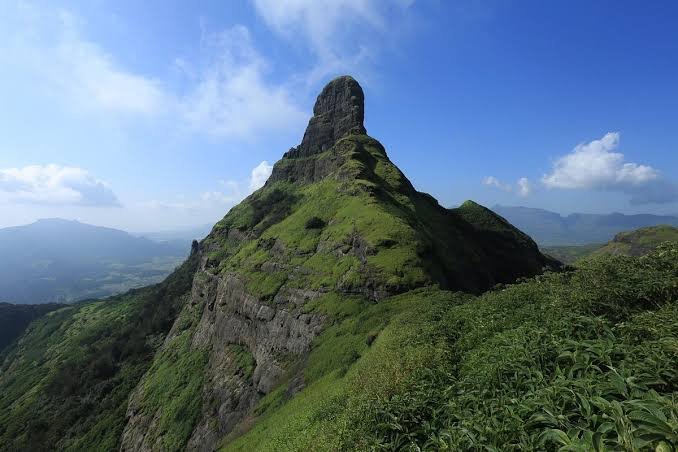
Ratangad Fort has a natural rock formation at its summit so distinctive that it’s become the single image most associated with the trek — a wind-carved hole through solid stone, large enough to frame the entire Sahyadri skyline on the other side. Locals call it Nedhe, the Eye of the Needle, and it’s just one reason this 400-year-old fort near Bhandardara remains one of Maharashtra’s most photographed treks.
| Quick Overview | Details |
| Location | Ratanwadi village, Ahmednagar district |
| Elevation | Approx. 4,250 feet |
| Origin | Bahmani Sultanate era, later Mughal-held |
| Captured by | Chhatrapati Shivaji Maharaj, 17th century |
| Timings | No fixed hours; daylight trekking recommended |
| Entry fee | Free |
| Trek distance | Approx. 6 km one way |
| Trek duration | 3 hours up, plus 2 hours at the fort |
A Watchtower for the Konkan Trade Routes
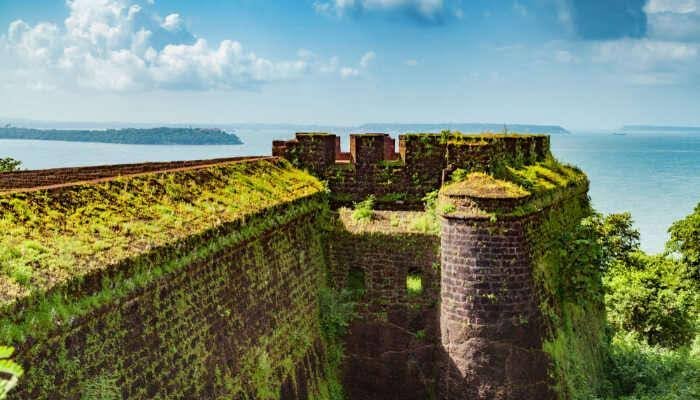
Ratangad’s earliest fortifications are generally attributed to the Bahmani Sultanate era, and the fort later came under Mughal control before Shivaji Maharaj recognized its strategic value and captured it in the 17th century. Positioned to command a sweeping view over the surrounding hills and valleys, the fort served the Maratha Empire specifically as a watchtower stronghold, protecting activity along the crucial trade routes connecting the Deccan plateau with the Konkan coast below.
That elevated, rock-cut position made Ratangad genuinely well suited to its defensive role — difficult to approach, easy to monitor from, and connected to a broader network of Sahyadri hill forts that together formed the Maratha Empire’s regional security web.
The Eye of the Needle
Ratangad’s most iconic feature is Nedhe, a broad, natural opening carved through the summit rock by centuries of wind erosion. Historically, this formation is believed to have served as an observation point, allowing defenders a genuinely commanding view of the surrounding terrain through the natural aperture. Today, it’s become the fort’s signature photo spot, framing views of distant peaks with a striking, almost deliberate composition that feels too perfect to be entirely natural.
Reaching Nedhe and the fort’s plateau typically involves navigating rock-cut steps and a well-known iron ladder section near the Trimbak Darwaza, the most commonly used of the fort’s entrances — a moderately challenging final stretch that adds a genuine sense of adventure to what is otherwise a manageable trek.
Gates, Caves, and a Temple Older Than the Fort
Ratangad’s layout includes four historic gates — Ganesh, Hanuman, Konkan, and Trimbak — each with its own water cistern nearby, reflecting the practical infrastructure needed to sustain a garrison stationed on this exposed hilltop.
- Rani Mahal ruins — remnants of what was once a residential structure atop the fort, hinting at its role beyond pure military function.
- Ancient water cisterns — carved into rock near each gate, several still holding water today.
- Two caves — a smaller one accommodating roughly 8 to 20 people and a larger cave capable of sheltering 30 to 50, both popular among trekkers planning an overnight stay.
- Amruteshwar Temple — located at the base in Ratanwadi village rather than atop the fort itself, this roughly 1,200-year-old Shiva temple, built in the distinctive Hemadpanthi style, actually predates the fort by several centuries and is renowned for its intricate stone carvings.
That combination — a genuinely ancient temple at the base, paired with a centuries-old fort above — gives Ratangad a layered historical depth that extends well beyond its Maratha-era military significance.
The Flower Trek That Happens Once Every Seven Years
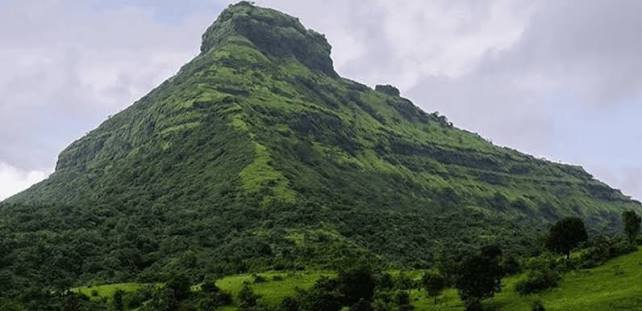
Ratangad’s monsoon season, from June onward, transforms the entire trail into vivid emerald greenery, with seasonal waterfalls appearing along the route and soft fog drifting across the fort through much of the day. Between August and October, the hillside bursts further into color as yellow Sonki flowers bloom across the slopes.
The truly rare spectacle, though, is the Karvi flower — a purple bloom that covers the fort only once every seven years, transforming the entire landscape in a way few other Maharashtra treks can match. Trekkers who happen to time their visit during this rare flowering season consider it one of the most spectacular sights in the entire Sahyadri range, and it’s genuinely worth checking the current bloom cycle before planning a trip specifically around this phenomenon.
Ratangad Fort Timings
There’s no formally fixed opening or closing schedule — Ratangad functions as an open trekking destination rather than a ticketed monument. Given the full round trip, including the climb, time at the summit, and descent, typically takes around 8 hours depending on group fitness and weather, starting early in the morning is essential to comfortably complete the trek within daylight hours.
Ratangad Fort Ticket Fee
There’s no entry fee to trek Ratangad Fort. Costs mainly arise from optional guided trek packages, which start from around ₹899 and typically include food, water arrangements, and route guidance — genuinely useful given the trail’s moderate difficulty and limited refreshment options along the way.
Best Time to Visit
Monsoon season, from June through September, is widely considered Ratangad’s most visually spectacular window, particularly for the Sonki bloom between August and October and the rare Karvi flowering when its seven-year cycle aligns. That said, the same rains make the rock-cut steps and iron ladder section considerably more slippery, so proper trekking shoes and caution matter more during this period. Winter months, October through February, offer a drier, clearer alternative, with sharper long-distance views of Kalsubai, Maharashtra’s highest peak, along with the Alang-Madan-Kulang range and Bhandardara Lake below.
Facts Worth Knowing
- Ratangad’s Nedhe, the Eye of the Needle, is a naturally wind-eroded rock formation believed to have served as a historic observation point for the fort’s defenders.
- The nearby Amruteshwar Temple at Ratanwadi predates the fort itself by several centuries, dating back roughly 1,200 years.
- The rare purple Karvi flower blooms across Ratangad’s slopes only once every seven years, making it one of Maharashtra’s most sought-after flower treks during that cycle.
- The fort offers views of Kalsubai, Maharashtra’s highest peak, alongside the Alang-Madan-Kulang range and Bhandardara Lake.
FAQs About Ratangad Fort
Q1. Which base village should I choose to start the Ratangad trek — Ratanwadi or Samrad?
Ratanwadi is the more commonly used and well-established base, particularly for visiting the Amruteshwar Temple beforehand, while Samrad is often preferred specifically for the seasonal flower trek route during monsoon.
Q2. Is the Ratangad trek suitable for beginners given the iron ladder section?
It’s generally rated moderate difficulty, and while the iron ladder near Trimbak Darwaza requires some caution and basic fitness, it’s manageable for reasonably fit beginners, especially when accompanied by an experienced guide.
Q3. Can I camp overnight in the caves atop Ratangad Fort?
Yes, the fort’s larger cave, accommodating up to 30 to 50 people, is a popular overnight camping spot among trekkers, though carrying your own supplies is essential since facilities are limited.
Q4. How can I find out if the rare Karvi flower is currently blooming at Ratangad?
Since the Karvi bloom follows roughly a seven-year cycle, checking with local trekking groups or forums closer to your planned visit date is the most reliable way to confirm whether the current season aligns with a bloom year.