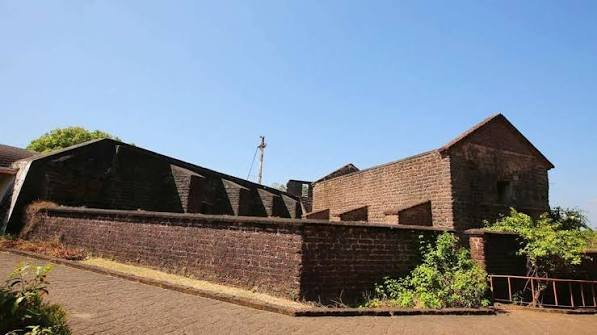
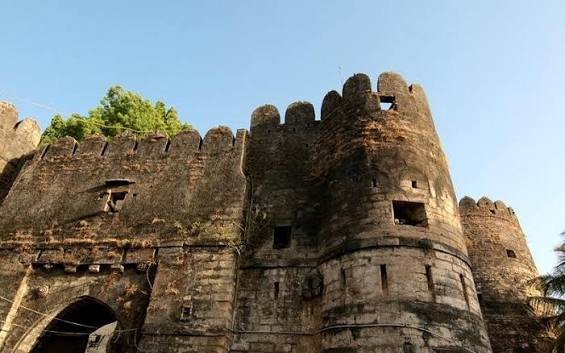
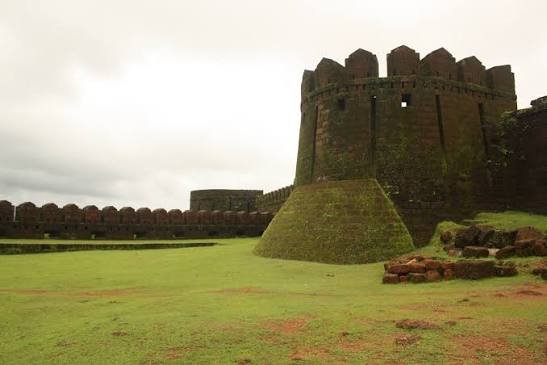
Ramshej Fort defended itself against an army roughly sixty times its own size — 600 Maratha soldiers holding off a Mughal force that at various points swelled toward 40,000 troops, backed by cannons, gunpowder, and siege engines. Aurangzeb’s commander promised to capture the fort within hours. The siege that actually followed dragged on for over six years.
| Quick Overview | Details |
| Location | Aashewadi village, Nashik-Peth road, Maharashtra |
| Meaning | “Ramshej” — Lord Ram’s bedstead |
| Elevation | 3,273 feet |
| Siege duration | 1682–1688 (six to seven years) |
| Defenders | Approx. 600 Maratha soldiers |
| Attacking force | Up to 40,000 Mughal troops |
| Timings | No fixed hours; daylight trekking recommended |
| Entry fee | Free |
Lord Ram’s Resting Place
Ramshej’s name carries a genuine mythological weight, tracing back to the Ramayana. Local tradition holds that Lord Rama made this hilltop his temporary residence during his period of exile, resting here before continuing his journey toward Lanka — a legend that gave the fort its name, “Ramshej,” meaning Lord Ram’s bedstead. That devotional layer is still honored today by a small Ram temple positioned right at the fort’s entrance.
Six Hundred Against Forty Thousand
Ramshej’s real historical fame, though, comes from an entirely different chapter — one written in blood, gunpowder, and remarkable Maratha stubbornness. Following Shivaji Maharaj’s death, his son Sambhaji Maharaj continued resisting the Mughal Empire’s determined campaign to crush Hindavi Swarajya, and Aurangzeb, descending into the Deccan to begin his own conquest, chose Ramshej as his opening target — a seemingly easy, modestly sized fort meant to boost his troops’ morale before tackling more formidable Maratha strongholds.
In April 1682, Aurangzeb dispatched Shahabuddin Khan with an initial force of roughly 10,000 troops, heavy artillery, and substantial gunpowder supplies, accompanied by seasoned military commanders including Qasim Khan and Ram Singh Bundela. Shahabuddin reportedly vowed to capture the fort within a matter of hours. Instead, the roughly 600 to 700 Maratha defenders inside, appointed by Sambhaji Maharaj, met the initial assault by hurling massive rocks down on the advancing Mughal soldiers, inflicting heavy losses and forcing a retreat into a prolonged siege.
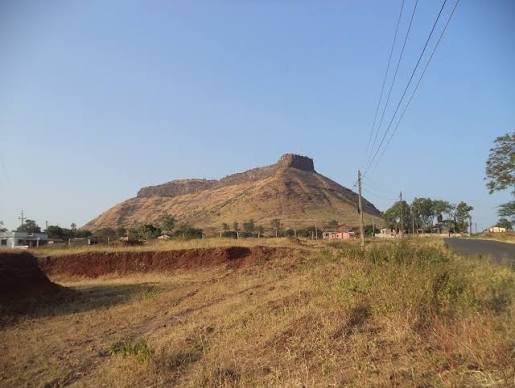
What followed was a genuinely extraordinary display of resistance. Shahabuddin tried virtually every tactic available to 17th-century siege warfare — direct assaults, tunneling and mines, ambushes, and full encirclement of the fort. He even constructed a wooden siege tower, or damdama, specifically to bombard Ramshej’s walls from an elevated position. None of it worked. The fort’s natural defenses, sitting atop a high tableland with steep escarpments on every side and no easy access point, meant the Mughal army was repeatedly forced to withdraw, sometimes all the way back to the base village. Over the course of the siege, Mughal troop numbers reportedly swelled at various points to as many as 40,000, and still the fort held. After roughly six and a half years of continuous resistance, Sambhaji Maharaj’s forces, led by Hambirrao Mohite, ultimately achieved victory, forcing the exhausted Mughal army to finally retreat.
Ramshej’s story eventually closed decades later, in 1818, when it was one of 17 Maratha strongholds surrendered to the British as the Maratha Empire’s power finally collapsed.
What Survives on the Summit
Ramshej’s surviving structures reflect both its devotional origins and its defensive military history.
- Ram Temple — positioned right at the fort’s entrance, honoring the site’s Ramayana-linked origins.
- Rock-cut water cisterns — scattered across the fort, including one near the temple that historically held potable water for the garrison.
- A main gate chiseled from the parent rock — located on the eastern side, a genuinely impressive feat of stone-cutting engineering.
- A hidden trap-door escape route — known locally as “chor-raster” or the secret road, kept covered with dirt and rubbish, allowing passage for one person at a time and leading toward neighboring Bhorgad Fort.
- Ruins of bastions and ammunition storage chambers — remnants of the fort’s defensive infrastructure during the prolonged Mughal siege.
- A cave temple dedicated to Lord Ram — encountered along the trekking trail through Aashewadi village.
From the summit, panoramic views stretch toward Trimbak, Satmala, and Bhorgad, rewarding trekkers with a genuinely sweeping look across this stretch of the Nashik hill country.
Ramshej Fort Timings
There’s no formally posted opening or closing schedule, given the fort’s status as an open trekking destination rather than a ticketed monument. Most visitors start their climb in the morning, allowing enough daylight for a comfortable ascent, exploration of the summit’s structures, and safe descent.
Ramshej Fort Ticket Fee
There’s no entry fee to visit Ramshej Fort. It’s accessible as a free day trip from Nashik, easily manageable within a single day.
Best Time to Visit and Getting There
Monsoon season is widely considered the most popular window for visiting Ramshej, transforming the surrounding hills into vivid green and making it one of Maharashtra’s favored monsoon trekking destinations, though the rock-cut steps become considerably more slippery underfoot during this period. The fort sits roughly 10 to 14.5 km from Nashik along the Nashik-Peth road, easily reached by state transport bus from Nashik’s CBS bus station toward Peth, alighting at Aashewadi Phata, followed by a short walk to Aashewadi village where the trekking trail begins.
Facts Worth Knowing
- Ramshej Fort withstood a Mughal siege lasting roughly six to seven years, defended by just 600 to 700 Maratha soldiers against a force that grew to as many as 40,000 troops.
- The fort’s name references a Ramayana legend describing Lord Rama resting here during his period of exile.
- Mughal commander Shahabuddin Khan’s siege tactics, including mines, ambushes, and a purpose-built wooden siege tower, all failed to breach the fort’s natural defenses.
- Ramshej was one of 17 Maratha strongholds finally surrendered to the British in 1818, decades after its legendary resistance against the Mughals.
FAQs About Ramshej Fort
Q1. Is the Ramshej Fort trek suitable for beginners?
Yes, it’s generally rated as a medium-grade trek accessible to most age groups, making it a manageable day trip from Nashik for both beginners and more experienced trekkers.
Q2. How much time should I set aside for a proper visit to Ramshej Fort?
Most visitors complete the trek, explore the temple, water cisterns, and main gate, and return within a single day, typically requiring 4 to 6 hours total including travel from Nashik.
Q3. Is Ramshej Fort worth visiting specifically during monsoon season?
Yes, genuinely so — the surrounding hills turn vividly green during monsoon, making it one of Maharashtra’s popular seasonal trekking destinations, though the rock-cut steps do become slippery, requiring proper footwear and caution.
Q4. Can I combine a Ramshej Fort visit with nearby Bhorgad Fort in the same trip?
The fort’s hidden trap-door escape route historically led toward Bhorgad, and experienced trekkers sometimes explore both destinations, though this typically requires additional planning and time beyond a standard single-day Ramshej visit.