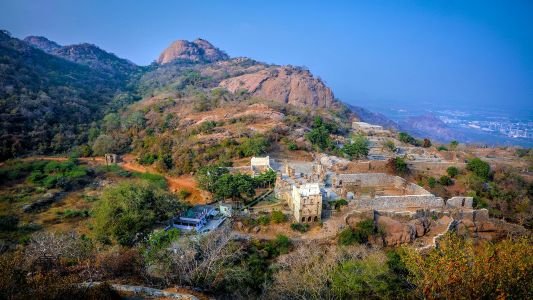
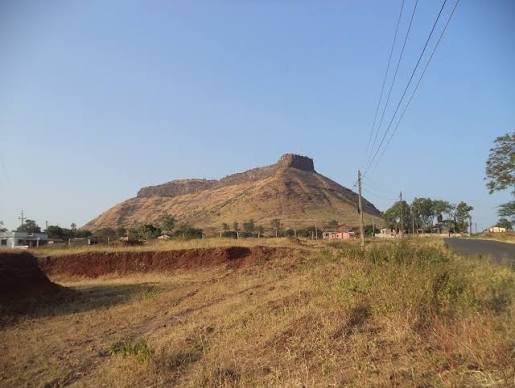
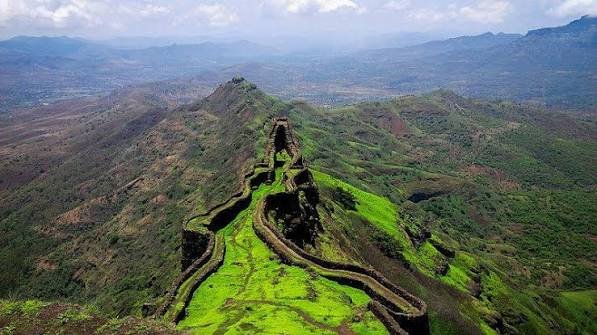
Sion Fort has nothing to do with the biblical city its name might suggest — “Sion” here comes from the Marathi word “Sheev,” meaning boundary, a fittingly literal name for a fort whose entire purpose was to mark exactly where British territory ended and Portuguese territory began. Perched on a conical hillock just steps from Sion railway station, this modest 17th-century watchtower has quietly witnessed Mumbai grow from a malarial swamp into one of the world’s largest cities.
| Quick Overview | Details |
| Location | Sion East, Mumbai, Maharashtra |
| Also known as | Sion Hillock Fort |
| Built by | Gerald Aungier, Governor of Bombay |
| Construction period | 1669–1677 |
| Historical purpose | Boundary marker, Parel–Salsette islands |
| Timings | 6:00/7:00 AM – 12:00 PM; 4:00 PM – 8:00/8:30 PM |
| Entry fee | Free |
| Heritage status | Grade I, managed by ASI |
A Name That Means “Boundary,” Not a Biblical City
The name Sion, despite its resemblance to the sacred hill referenced in religious texts, actually derives entirely from the Marathi word “Sheev,” meaning boundary or entrance to a city or village — a linguistic coincidence rather than any deliberate religious naming. That etymology fits the fort’s function precisely: it was built specifically to mark the northeastern edge of British-held territory, staring directly across a narrow causeway at Portuguese-controlled Salsette Island.
Built by the Governor Who Turned a Swamp Into an Empire
Gerald Aungier, the second Governor of Bombay under the East India Company, inherited what was essentially a scattered, swampy, malaria-prone archipelago — territory the English Crown had received as part of a Portuguese royal dowry in 1661. During his tenure from 1669 to 1677, Aungier set about consolidating this fragmented holding into something genuinely defensible, and Sion Fort was one of several boundary markers he commissioned to formalize the Company’s territorial claims against both the neighboring Portuguese and the broader Maratha presence beyond.
The fort’s job was never to withstand a prolonged siege — its function was simpler and more strategic: watch the causeway, wait for movement, and warn Bombay of anything approaching from Salsette. That causeway, the Sion Causeway, served as the sole point of entry into Bombay from the mainland at the time, making this modest hillock watchtower disproportionately important to the security of the entire British settlement, particularly given how firmly Salsette remained under Maratha influence during this period.
Two Mumbais From One Hilltop
What makes a visit to Sion Fort genuinely worthwhile today isn’t grand architecture — the structure itself was never meant to be imposing — but the view from its summit, which captures a striking juxtaposition of old and new Mumbai in a single glance.
- Eastward view — oil refineries and the salt pans of Thane Creek stretch toward the horizon, a landscape still defined by industry.
- Westward view — the glass towers of the Bandra-Kurla Complex glint in the distance, alongside the Bandra-Worli Sea Link catching the evening light near sunset.
- A small chapel — dedicated to Our Lady of Good Voyage, reportedly still intact in parts and occasionally used for religious ceremonies.
- A well that never runs dry — according to local accounts, even during periods of drought, adding a small but persistent piece of folklore to the site.
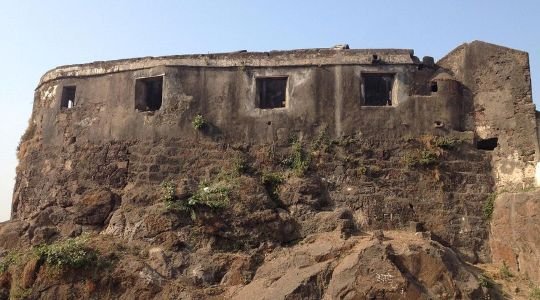
- A bastion — historically used to house cannons, along with scattered wall fragments, a watchtower, and a tank surviving among the ruins.
- Two entrances — a western gate leading up a steep flight of stairs, and an eastern entrance opening onto a rampart with sweeping views.
That combination of decayed colonial-era stonework framing a genuinely dramatic modern skyline is what draws photographers, history enthusiasts, and couples looking for a quiet, offbeat Mumbai vantage point.
Sion Fort Timings
Reported hours follow a split daily schedule, generally cited as 6:00 or 7:00 AM to 12:00 PM, reopening from 4:00 PM to either 8:00 or 8:30 PM. This unusual midday closure is worth planning around carefully, since arriving between noon and 4:00 PM would mean finding the fort closed. Evening visits, timed roughly an hour before sunset, are particularly recommended for catching the western view of the Sea Link against the fading light.
Sion Fort Ticket Fee
There’s no entry fee to visit Sion Fort, consistent with its status as a modestly maintained ASI Grade I heritage site rather than a major ticketed attraction.
Best Time to Visit
November through February brings Mumbai’s most comfortable weather for the climb up the fort’s original basalt steps, some of which remain broken or slippery, making closed-toe shoes a genuinely sensible choice regardless of season. Monsoon season also has its own appeal, with the surrounding hillock turning lush and green, though the same broken steps become considerably more treacherous when wet.
Facts Worth Knowing
- Sion Fort’s name derives from the Marathi word “Sheev,” meaning boundary, and has no connection to the biblical city despite the similar spelling.
- The fort was built under Gerald Aungier, the Governor of Bombay who spent his tenure consolidating a scattered, swampy territorial holding into a defensible settlement.
- The Sion Causeway it once guarded was historically the only point of entry into Bombay from the mainland island of Salsette.
- The fort’s summit offers a genuinely striking contrast between Mumbai’s industrial east — oil refineries and salt pans — and the modern glass towers of the Bandra-Kurla Complex to the west.
FAQs About Sion Fort
Q1. Why does Sion Fort close for several hours in the middle of the day?
The fort follows a split visiting schedule, generally open in the early morning and again from late afternoon into the evening, so planning your visit outside the midday closure window between roughly 12:00 PM and 4:00 PM is essential.
Q2. Is Sion Fort suitable for a quick visit given its small size?
Yes, most visitors comfortably explore the fort’s ruins, viewpoints, and surrounding garden within 30 to 45 minutes, making it an easy addition to a broader day in the area.
Q3. Is the climb to Sion Fort’s summit difficult or requires any special preparation?
It’s a relatively short but sometimes uneven climb over original basalt steps, some of which are broken or slippery, so wearing closed-toe shoes with good grip is genuinely advisable.
Q4. Is Sion Fort a good spot for photography, particularly around sunset?
Yes, genuinely so — arriving roughly an hour before sunset and heading to the western-facing viewpoint offers particularly striking light over the Bandra-Worli Sea Link and the surrounding cityscape.