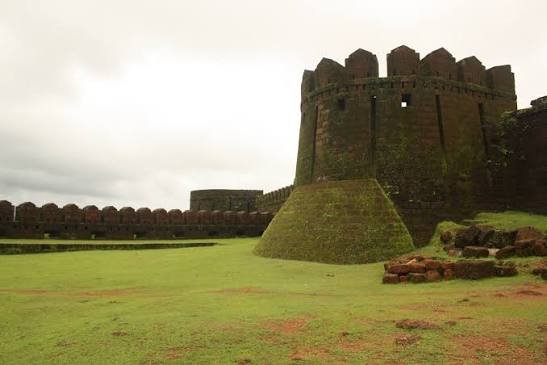
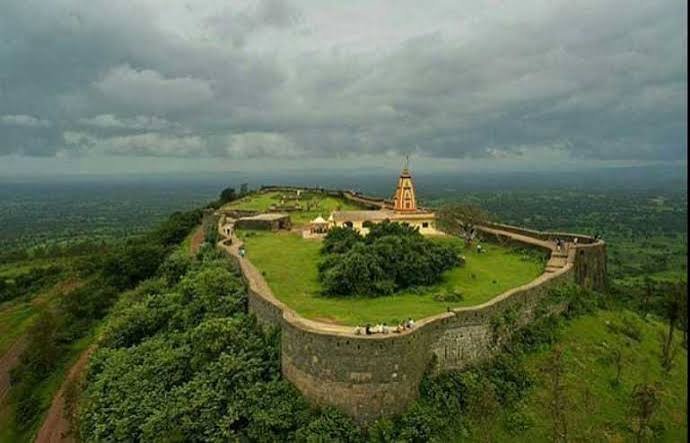
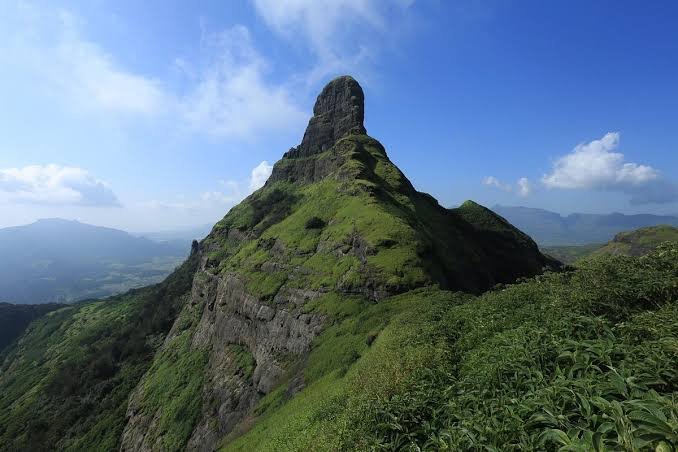
Panhala Fort is unlike almost every other hill fort in Maharashtra in one crucial way — people still live inside it. While most Sahyadri forts sit abandoned as pure ruins, Panhala has remained continuously inhabited since it was built more than 800 years ago, and today its ramparts enclose an actual functioning town, complete with a school and government offices operating within centuries-old walls.
| Quick Overview | Details |
| Location | Panhala, Kolhapur district, Maharashtra |
| Built by | Raja Bhoja II, Shilahara dynasty |
| Construction period | 1178–1209 CE |
| Meaning | “House of Serpents” (zigzag shape) |
| Altitude | Approx. 3,127–3,200 feet |
| Timings | 8:00 AM – 6:00 PM, daily |
| Entry fee | ₹15 (Indian), ₹200 (Foreign) — some sources cite free entry |
| Historical role | Briefly served as Maratha capital |
The House of Serpents
Panhala’s origins trace back to Raja Bhoja II of the Shilahara dynasty, who built it between 1178 and 1209 CE as one of fifteen forts constructed under his rule, alongside others like Vishalgad and Bhudargad. Its distinctive nickname, “House of Serpents,” comes directly from its layout — the fort’s walls wind and zigzag across the hillside in a shape that genuinely resembles a coiled snake when viewed from above, a design choice that also happened to make direct assault considerably harder for any attacking force.
Control of the fort shifted repeatedly over the following centuries. The Yadavas of Devagiri took over after the Shilaharas, reinforcing its defenses further, before the Bahmani Sultanate drew it into the broader power struggles of the Deccan. In 1489, the Adil Shahi dynasty of Bijapur took control and expanded the fort considerably, adding sturdy bastions, underground water systems, and military architecture sophisticated enough to withstand prolonged sieges — infrastructure that would prove critical to the fort’s most famous chapter, still to come.
The Sacrifice at Pawan Khind
Shivaji Maharaj seized Panhala in 1659, but holding it proved far harder than capturing it. In 1660, Adilshahi forces under Siddi Johar laid siege to the fort, trapping Shivaji inside. What followed became one of the most retold episodes in Maratha history.
Under cover of darkness on the night of July 13, 1660, Shivaji slipped out of the fort with around 600 loyal soldiers, heading for the safety of Vishalgad. To buy him time, a barber named Shiva Kashid, who bore a striking resemblance to Shivaji, deliberately misled the enemy by posing as the king himself while descending in a different direction. When the ruse was eventually discovered, the pursuing forces turned their full attention toward the real escape route.
That’s when Baji Prabhu Deshpande, along with his brother Phulaji and roughly 300 Mavala soldiers, made their stand at Ghodkhind, holding the narrow mountain pass against overwhelming numbers for five to six hours — long enough for Shivaji to reach Vishalgad safely. Baji Prabhu, severely wounded in the fighting, reportedly held on just long enough to hear the cannon-fire signal confirming Shivaji’s safe arrival before succumbing to his injuries. In recognition of that sacrifice, Ghodkhind was later renamed Pawan Khind, meaning the “sacred pass,” and Baji Prabhu Deshpande’s name has remained tied to Maratha valor ever since.
A Fort That Never Stopped Being a Home
After the Battle of Pawan Khind, Panhala was returned to the Adilshahi, but Shivaji recaptured it permanently in 1673 through a clever subterfuge orchestrated by Kondhaji Farzand. From that point, Panhala grew into the second-most important fort in the Maratha Empire, ranked only behind the capital, Raigad — Shivaji himself is said to have spent over 500 days here during his reign.
The fort’s political importance peaked once more after Raigad fell to Mughal forces in 1689. Panhala stepped in as the de facto Maratha capital during that turbulent period, and in 1709, Queen Tarabai, widow of Shivaji’s younger son Rajaram I, declared an entirely independent kingdom of Kolhapur from within these walls, with Panhala serving as its capital. That deep, sustained habitation is precisely why the fort never fell into ruin the way so many other Sahyadri forts eventually did — it kept being lived in, generation after generation, right up to the present day.
Several structures within the fort reflect this long, layered occupation:
- Teen Darwaza — a substantial triple-gated entrance, among the most photographed structural features of the fort.
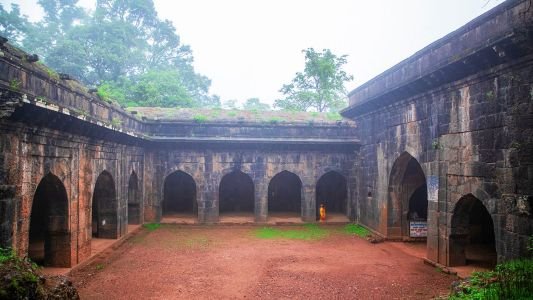
- Andhar Bavadi — a hidden, dimly lit stepwell historically used both for water storage and as a covert escape route during sieges.
- Ambarkhana — a set of three granary buildings, built specifically to keep the fort self-sufficient during prolonged blockades.
- Baji Prabhu Deshpande’s statue — a memorial honoring his sacrifice, drawing visitors interested in the Pawan Khind story specifically.
- Underground tunnels and secret passageways — remnants of the fort’s defensive network, added extensively during the Adil Shahi expansion.
Panhala Fort Timings
The fort is generally open daily from 8:00 AM to 6:00 PM. Since Panhala functions as a living town rather than a purely ticketed monument, certain public areas and pathways remain accessible beyond these hours as well, though the main historical structures and viewpoints are best explored within standard daylight visiting hours.
Panhala Fort Ticket Fee
There’s some inconsistency in reported pricing worth noting directly. Several sources cite a standard entry fee of ₹15 for Indian citizens and ₹200 for foreign tourists, while others describe the fort as entirely free to enter, consistent with its unusual status as an inhabited settlement rather than a strictly managed heritage site. Given this discrepancy, confirming current policy locally before your visit is the sensible approach.
Best Time to Visit
Monsoon season, from June through September, transforms Panhala into a strikingly lush, cloud-wrapped hill destination, and many visitors specifically time their trips around this period for the dramatic scenery alone. Winter months, October through February, offer more comfortable walking conditions for covering the fort’s considerable spread, with clearer visibility across the surrounding Sahyadri valley. Most visitors budget 2 to 3 hours to properly explore the main structures and viewpoints.
Facts Worth Knowing
- Panhala Fort has remained continuously inhabited since its construction, making it genuinely unusual among Maharashtra’s largely abandoned hill forts.
- Shivaji Maharaj reportedly spent more than 500 days at Panhala across his reign, reflecting its strategic and personal importance to him.
- Queen Tarabai declared an independent Kolhapur kingdom from Panhala in 1709, briefly making it a capital in its own right.
- The fort’s nickname, “House of Serpents,” comes directly from its winding, zigzag wall layout designed partly for defensive advantage.
FAQs About Panhala Fort
Q1. Is it true that people currently live inside Panhala Fort?
Yes, unlike most Sahyadri hill forts, Panhala has remained inhabited for centuries, and today it includes a functioning village with a school and government offices operating within the historic fort walls.
Q2. How is Panhala Fort connected to the story of Baji Prabhu Deshpande?
Baji Prabhu made his legendary last stand at nearby Pawan Khind (formerly Ghodkhind) in 1660, holding off pursuing forces long enough for Shivaji to escape Panhala safely, a sacrifice still commemorated with a statue within the fort.
Q3. Is Panhala Fort suitable for a day trip from Kolhapur?
Yes, easily. Located about 22 km from Kolhapur, it makes for a comfortable half-day or full-day trip, especially when combined with the scenic drive through the Sahyadri hills.
Q4. Why do reported entry fees for Panhala Fort vary between sources?
Given the fort’s unusual status as an inhabited, functioning settlement rather than a strictly ticketed monument, policies around entry charges appear inconsistently applied or reported. Checking locally on arrival is the most reliable way to confirm current practice.