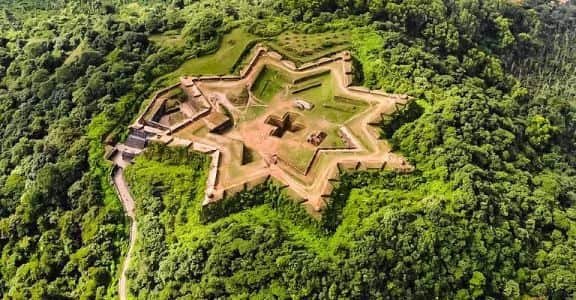
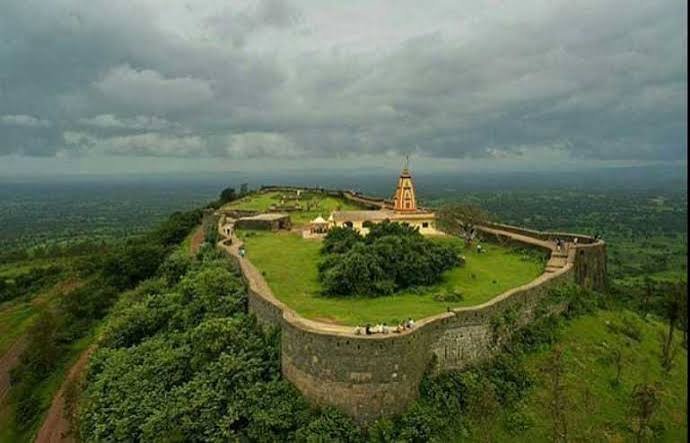
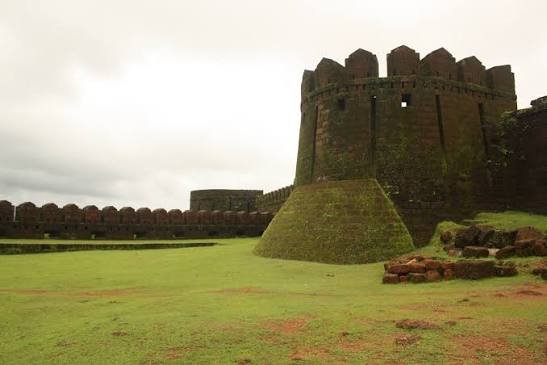
Kondapalli Fort started life not as a military stronghold at all, but as a leisure retreat — a recreational palace and business center built by a Reddy dynasty king who clearly valued comfort as much as defense. That original purpose didn’t last long, though, as the fort’s strategic hilltop position soon dragged it into one of the most tangled succession struggles in Deccan history, complete with two royal brothers fighting over a throne with this very fortress used as a bargaining chip.
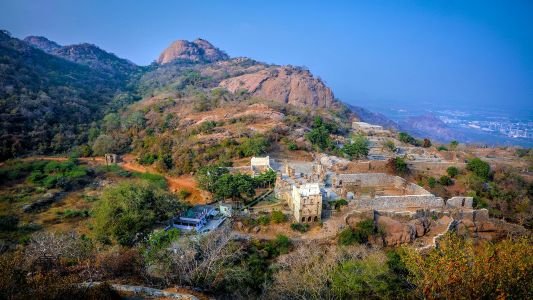
| Quick Overview | Details |
| Location | Kondapalli Village, Krishna district, Andhra Pradesh |
| Also known as | Kondapalli Kota, Kondapalli Quilla |
| Built by | Anna Vemareddy (Prolaya Vema Reddy), Kondaveedu Reddy dynasty |
| Year built | 1360 CE |
| Area | Approx. 18 sq. km |
| Timings | 10:00/10:30 AM – 5:00 PM, daily |
| Entry fee | ₹5–30 (varies by source) |
| Known for | Rock tower, Dargah Darwaza, Kondapalli wooden toys |
Built as a Pleasure Palace, Fought Over as a Prize
Kondapalli Fort was constructed in 1360 CE by Anna Vemareddy of the Kondaveedu Reddy dynasty, the same family responsible for the nearby Kondaveedu Fort, after capturing this hilltop site from the Mudigonda Chalukyas. Initially, the fort served a genuinely relaxed purpose — functioning as a recreational palace and business center rather than a purely defensive structure, reflecting the Reddy dynasty’s comfortable position of regional power at the time.
That peaceful beginning gave way to genuine political drama when control passed to the Gajapati rulers of Orissa. A fierce succession struggle erupted between two Gajapati brothers, Hamvira and Purushottam, over the throne following their father’s death. Hamvira sought military assistance from the Bahmani Sultan to defeat his brother, succeeding in 1472 — but the price of that help was steep: he had to hand over both Kondapalli Fort and Rajahmundry to the Bahmani Sultan as payment. Purushottam later reversed the outcome, defeating Hamvira in 1476 and reclaiming the Gajapati throne, though some accounts suggest a famine-driven garrison revolt at Kondapalli that same year briefly returned the fort to Hamvira’s control before the dust finally settled.
The fort’s next major turning point came in 1520, when Krishnadevaraya of the Vijayanagara Empire captured it during his Kalinga military campaigns. Control subsequently passed to the Qutb Shahi dynasty in the 16th century, and during the colonial period, British forces used the fort as a training base for their soldiers, adding yet another chapter to its genuinely varied administrative history.
Gates Named for the Defeated
Kondapalli’s most striking architectural feature is its rock tower, rising three storeys and protected by three distinct levels of entry, with each gate carrying its own story.
- Dargah Darwaza — the fort’s main entrance, carved from a single massive block of granite, standing 12 feet wide and 15 feet tall. The name derives from the tomb of Gulab Shah, who was defeated in a conflict at the fort, with his memorial marked near this gateway.
- Golconda Darwaza — the fort’s second major gate, leading toward the neighboring village of Jaggaiahpet on the banks of the Paleru River.
- Tanisha Mahal — a palace structure within the fort, reflecting its Qutb Shahi-era occupation.
- Dargah of Gareeb Sahib — another religious structure within the complex, adding to the fort’s layered spiritual history.
- English barracks and cemetery — remnants of the fort’s colonial-era use as a British military training base, including an eight-room barracks structure.
- Reservoirs and water tanks — practical infrastructure ensuring the fort’s garrison had reliable water access.
The Fort Behind Andhra’s Most Famous Wooden Toys
Beyond its layered military and political history, Kondapalli holds a genuinely charming modern connection: the surrounding villages are famous across India for Kondapalli wooden toys, a traditional craft producing brightly painted, intricately carved wooden figures that have earned recognition as one of the region’s most distinctive artisanal exports. Vendors regularly set up near the fort selling these handmade dolls and figurines, giving visitors a natural, easy souvenir to bring home alongside their fort visit — a pairing of heritage tourism and living craft tradition that few other Indian forts offer quite so directly.
Kondapalli Fort Timings
The fort is generally open daily from 10:00 or 10:30 AM to 5:00 PM, with no weekly closure. Given the considerable area the fort covers, roughly 18 sq km including its surrounding grounds, arriving earlier in the day allows a more relaxed pace for exploring both the rock tower and the fort’s various gates and structures.
Kondapalli Fort Ticket Fee
Reported pricing shows some variation across sources, with older listings citing a genuinely modest ₹5 for adults and ₹3 for children, while more recent sources mention a rate closer to ₹30 per person. Given this spread, confirming the current fee at the entrance is worth doing before your visit.
Best Time to Visit and Getting There
Given Kondapalli’s location and climate, visiting throughout most of the year is feasible, though the cooler months offer the most comfortable conditions for exploring the fort’s hillside terrain and three-storey rock tower. The fort sits roughly 16 to 24 km from Vijayawada’s city center and railway station, easily reached by road, with an alternative 1,000-metre adventure trekking path through the surrounding forest available for visitors wanting a more active approach. Rajiv Gandhi International Airport in Hyderabad serves as the nearest major air connection, roughly 43 km away by road once you’ve reached the general Vijayawada area.
Facts Worth Knowing
- Kondapalli Fort was originally built as a recreational palace and business center rather than a purely defensive structure.
- A bitter succession struggle between Gajapati brothers Hamvira and Purushottam saw the fort used as a bargaining chip with the Bahmani Sultan in 1472.
- Krishnadevaraya of the Vijayanagara Empire captured the fort in 1520 during his Kalinga military campaigns.
- The surrounding Kondapalli villages remain famous for their traditional wooden toy craft, making the fort a natural pairing with authentic local souvenir shopping.
FAQs About Kondapalli Fort
Q1. Is it possible to buy authentic Kondapalli wooden toys near the fort itself?
Yes, vendors regularly sell these handcrafted wooden dolls and figurines near the fort entrance, making it a convenient and genuine place to pick up an authentic regional souvenir alongside your visit.
Q2. How much time should I set aside for exploring Kondapalli Fort properly?
Most visitors need 1 to 2 hours to comfortably cover the main rock tower, gates, and surrounding structures, though those taking the forest trekking route should allow additional time.
Q3. Is the adventure trekking path to Kondapalli Fort suitable for casual visitors?
It’s a genuinely active alternative to the standard road approach, better suited to visitors comfortable with a roughly 1,000-metre forest walk rather than those seeking the most direct, effortless route.
Q4. Why do reported entry fees for Kondapalli Fort vary so much between sources?
Pricing appears to have been revised over recent years, with older listings reflecting a lower historical rate and newer sources citing a higher current fee, so confirming the exact amount at the ticket counter avoids any confusion.