Cabo de Rama Fort carries a name that ties it directly to Hindu mythology, long before Portuguese cannons or British soldiers ever set foot on this cliff. Local belief holds that Lord Rama himself, along with Sita and Lakshman, sheltered on this very headland during their fourteen years of exile — making this one of the rare Goan forts where the story predates the fort by thousands of years rather than the other way around.
| Quick Overview | Details |
| Location | Canacona, South Goa |
| Named after | Lord Rama (Ramayana) |
| Built by | Hindu rulers of the Soonda dynasty |
| Seized by Portuguese | 1763 |
| Later use | Government prison, until 1955 |
| Timings | Open during daylight hours |
| Entry fee | Free, no formal ticket counter |
| Best time to visit | October to March |
Where the Ramayana Meets Colonial History
The fort’s origins trace back to Hindu rulers, generally associated with the Soonda dynasty, long before any European power arrived on the Konkan coast. Its name and the surrounding legend connect it to the Ramayana, with local tradition holding that this cliff-top site once sheltered Rama, Sita, and Lakshman during their years of banishment from the kingdom — a story that gives the fort a spiritual weight most colonial-era forts in Goa simply don’t carry.
That original Hindu structure changed hands repeatedly over the centuries, passing between Hindu, Muslim, and eventually Portuguese control. The decisive shift came in 1763, when the Portuguese defeated the Raja of Soonda and took full control of the fort. Rather than leaving it as they found it, they expanded the site considerably, adding military barracks, a chapel, cannons, and further defensive fortifications suited to their own strategic needs along the coast.
From Battlefield to Government Prison
What makes Cabo de Rama’s history unusually layered is what happened after its military relevance faded. Following continued Portuguese control and later a period under British occupation, the fort eventually found a far less glamorous second life — it was converted into a government prison, a role it held until 1955. Only after that did the site truly fall into the ruins visitors encounter today.
This transition from ancient mythological site, to contested military stronghold, to functioning prison, and finally to tourist attraction gives Cabo de Rama a genuinely unusual historical arc compared to most Goan forts, which tend to stop their story at either the Hindu or Portuguese chapter.
What Remains Today
Despite centuries of shifting purpose and eventual abandonment, several features still survive well enough to explore.
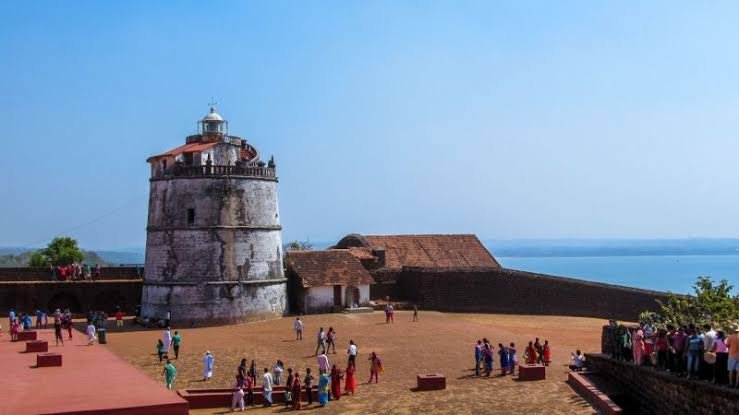
- Church of St. Anthony — a small, whitewashed chapel still active within the fort grounds, its bright walls standing in striking contrast against the fort’s darker stone.
- Rusting cannons — scattered remnants from the Portuguese military era, still visible along sections of the old defensive walls.
- Watchtowers and dry moats — faint outlines of the fort’s original defensive layout, though heavily weathered by time and coastal exposure.
- Old prison cells — physical reminders of the site’s mid-20th-century use, adding an unexpectedly recent layer to an otherwise ancient location.
- Freshwater springs — a practical detail that likely explains why this cliff-top location remained inhabited and defensible across so many different ruling powers.
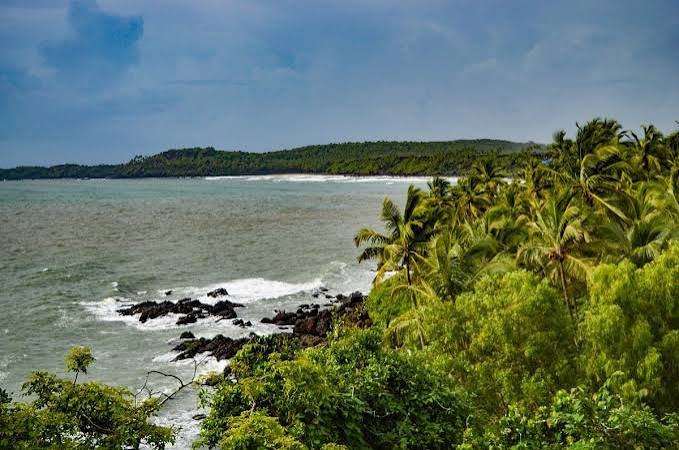
Beyond the ruins themselves, the real draw for most visitors is the view — sweeping panoramas of the Arabian Sea, with the coastline stretching toward both Cabo de Rama Beach and the pebble-strewn shore just below the cliff.
Cabo de Rama Fort Timings
There’s no strict, formally posted operating schedule here. The fort is accessible during daylight hours, and given the uneven pathways and cliffside drops throughout the ruins, visiting after dark isn’t advisable regardless of any official restriction. Most visitors plan around sunrise or sunset specifically, since the lighting at those hours dramatically improves both photography and the overall atmosphere of the ruins against the sea.
Cabo de Rama Fort Ticket Fee
There’s no entry fee, and unlike many heritage sites in Goa, Cabo de Rama doesn’t have a formal ticket counter or gated entry system at all. Visitors are free to walk in and explore the grounds at their own pace, which fits the site’s generally low-key, ruin-focused character compared to more polished, ticketed forts elsewhere in the state.
Getting There and Best Time to Visit
The fort sits roughly 16 km north of Agonda Beach and about 28 km from Margao, making it easily reachable by rented scooter, bike, or taxi from most South Goa beach towns. Renting a bike typically costs ₹300 to ₹500 per day, while taxis from nearby beaches run somewhere between ₹800 and ₹1,500 one way — booking a return trip in advance is wise, since taxis aren’t easy to find waiting near the fort itself.
October through March remains the ideal window, offering pleasant weather for the walk around the exposed cliff-top ruins. Monsoon season is best avoided altogether, given the limited shelter available within the fort and the genuinely slippery conditions along its uneven pathways.
Facts Worth Knowing
- Cabo de Rama is considered one of the oldest and largest forts in Goa, spread across roughly 180,000 square metres.
- Its name directly references Lord Rama, tied to local legend about his exile-period stay on this cliff.
- The fort functioned as a government prison until 1955, a far more recent chapter than its ancient origins suggest.
- Wildlife including sea eagles and monkeys are commonly spotted around the fort’s lush, cliffside surroundings.
FAQs About Cabo de Rama Fort
Q1. Is Cabo de Rama Fort safe to explore given its ruined condition?
Generally yes during daylight hours, though the uneven pathways and cliff edges require caution, especially for children or anyone unsteady on rough terrain. Sturdy footwear makes a real difference here.
Q2. Can I combine a visit to Cabo de Rama Fort with nearby beaches in one trip?
Absolutely, and most visitors do exactly that. Cabo de Rama Beach sits just below the fort via a steep pathway, and Agonda and Palolem beaches are both a short drive away for a fuller day out.
Q3. Is there anywhere to eat or buy water near the fort?
Facilities are limited right at the fort itself, so it’s worth carrying water and snacks, particularly if you’re visiting during warmer months or planning to spend extended time exploring the grounds.
Q4. Why does the fort have both a Hindu mythological name and Portuguese-era structures?
The site’s history spans multiple ruling periods — Hindu rulers established it first, tying it to the Ramayana legend, before the Portuguese took control in 1763 and added their own military and religious structures, layering colonial history onto the older mythological foundation.